Ulf Sverdrup

Kontaktinfo og filer
Sammendrag
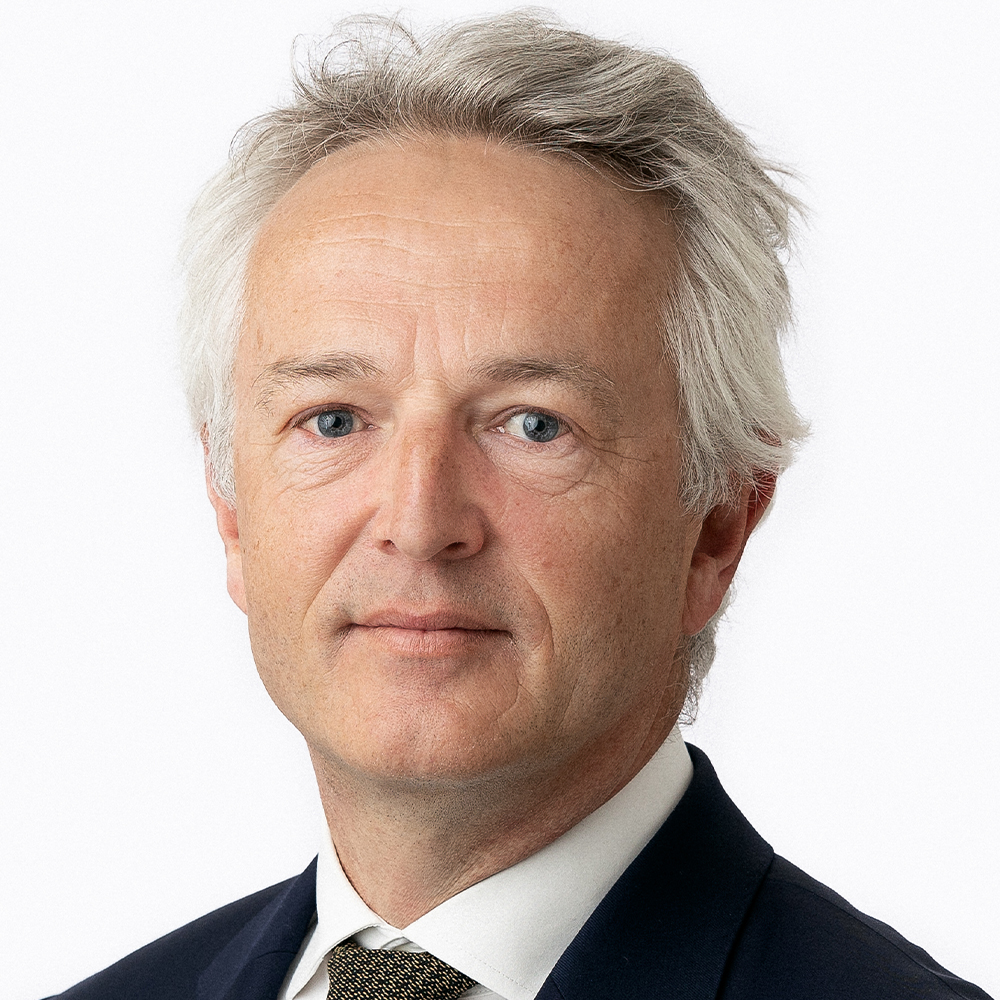
Ulf Sverdrup var i perioden 2011-2023 direktør på NUPI. Han har doktorgrad i statsvitenskap fra Universitetet i Oslo. Sverdrup har vært professor ved Handelshøyskolen BI, og forskningsprofessor ved ARENA ved UiO.
Sverdrup har ledet et regjeringsutnevnt utvalg som skal utrede langtidsperspektivene for Statens pensjonsfond utland, og han var sekeretariatsleder for Europautredningen (NOU 2012:2).
Han har publisert omfattende arbeid på en rekke tema innen internasjonal politikk, med spesielt fokus på europeiske anliggender og norsk utenrikspolitikk.
Ekspertise
Utdanning
2000 Dr. polit fra Arena/Instiutt for statsvitenskap, Universitetet i Oslo
1993 Cand. polit fra Universitetet i Bergen
Arbeidserfaring
2011-2023 Direktør, NUPI
2010-2011 Sekretariatsleder for Utvalget for utredning av Norges avtaler med EU, Europautredningen
2000-2011 Seniorforsker ved Arena, Senter for Europastudier, UiO
2008-2010 Professor ved BI
Aktivitet
Filter
Tøm alle filtre
Noreg og ei verd i endring
Korleis skal Noreg vareta sine interesser i ei stadig meir motsetningsfylte verda?
Mer inne enn ute
Brexit synes å ha endret Norges status i EU. Resultatet er at Norge er oppgradert, ikke nedgradert.
Nye toner i norsk europapolitikk
Regjeringen varsler taktskifte for Norges EU-strategi. Det kommer til rett tid og med forfriskende begrunnelser.
Preface - Russia's turn to the East
Pictures can sometimes be more revealing than words. If you ever sit down and look at a night-time satellite picture of the Earth, you will find that there are still huge areas on our planet that are not lit up by human activities and cities. One of the largest ‘dark spots’ in the Northern Hemisphere is found in the Russian Far East, or Pacific Russia. Here are enormous territories rich in natural resources like petroleum, minerals, forests and water – but these vast reaches are sparsely populated, and lack connective infrastructure. A closer look at the satellite image will reveal a tiny thread of light, almost like an umbilical cord, linking the Far Eastern part of Russia with the European part. This is the Trans-Siberian Railway that connects the Eastern and Western parts of Russia. The same satellite picture shows few traces of networking with the territories of the immediate neighbourhood – the brightly lit, heavily populated, urbanized and dynamic Asian economies of China, Japan and the Republic of Korea. It is hardly surprising that Russia has intensified its efforts at closer integration with these Asian neighbours, economically and politically. For Russia, this pivot to Asia represents huge opportunities, but it also entails significant economic, administrative, technological, cultural and strategic challenges. The contributors to this book examine the nature, speed and direction of the long-term structural shift. Rather than taking the declared ‘pivot’ as a fact and exploring the likely consequences, the authors ask whether there has in fact been such a new pivot – or if what we see today is a continuation of longer-duration trends, concerns and ambitions. The authors explore the relationship between integration and disintegration, examining whether Russia’s turn to the East has intensified or changed in nature – domestically and internationally – since the onset of the current crisis in relations with the West. In turning to the East, is Russia also turning away from the West? This project is a result of collaboration involving scholars from Norway, Russia, Korea and the UK, and has been supported financially by the Korea Foundation and the Norwegian Ministry of Foreign Affairs. In preparing this book, we have also benefited from our involvement in the project ‘Developing Asia Pacific’s Last Frontier: Fostering International Cooperation in the Development of Russia’s Far East and Siberia’, working with partners in Russia, Japan, China and Singapore.
Norge trenger en Kina-strategi
Hva slags Kina-politikk er vi tjent med? spør Ulf Sverdrup i denne DN-kronikken.
Eit meir samankoppelet Asia – nye moglegheiter i Europa?
Handel og infrastrukturprosjekt skyt fart i Asia. Korleis kan det endre forholdet mellom land i Asia og Europa?