Åsmund Weltzien

Kontaktinfo og filer
Sammendrag
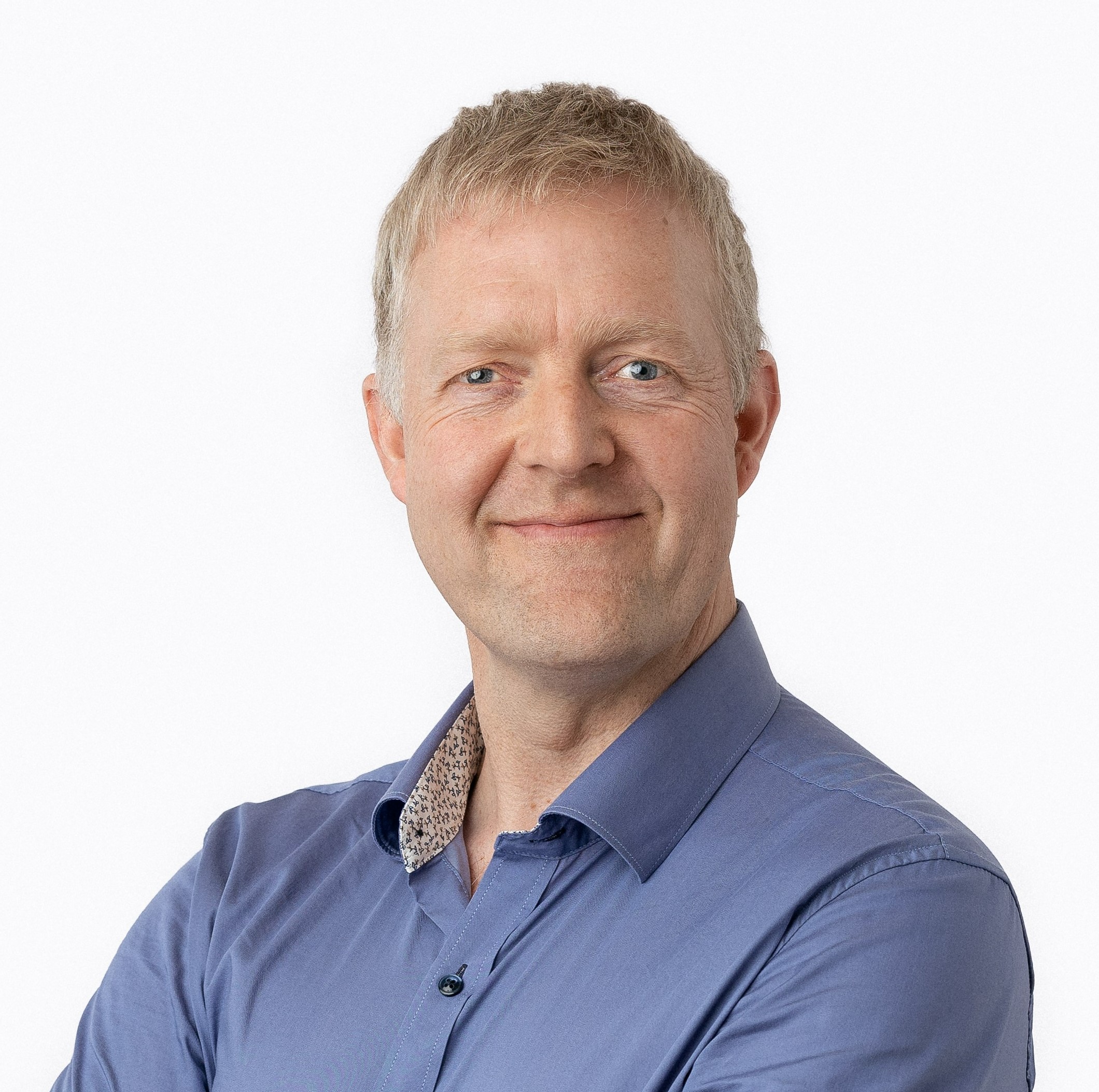
Åsmund Weltzien er kommunikasjonssjef på NUPI. Han har hovedfag i sosialantropologi fra Universitetet i Oslo, og har tidligere jobbet som forsker og forskningsleder i Telenor R&D og som diplomat og saksbehandler i Utenriksdepartementet.
Weltzien jobber for å fremme NUPIs forskning til et bredt publikum og til brukerne av forskningen vår. Han er spesielt opptatt av å bidra til at NUPIs forskere skaper sosial og vitenskapelig impact, å forbedre vår digitale kommunikasjon gjennom utvikling og eksperimentering, og å bygge nettverk blant fagpersoner, brukere og interessenter der kunnskap og innsikt deles på tvers av institusjoner og sektorer.
I Telenor var Weltziens egen forskning fokusert på utviklingen av nye digitale teknologier og hvordan informasjon og påvirkning spres i sosiale nettverk. I Utenriksdepartementet har han jobbet med ulike felt som norsk klimapolitikk, sikkerhetspolitikk, og europapolitikk. Fra 2011 var Weltzien en del av UDs Refleksprosjekt, som skulle bidra til utvikling av utenrikspolitikken gjennom offentlig debatt om sentrale utenrikspolitiske temaer.
Weltzien har vært kommunikasjonssjef på NUPI siden 2013.
Ekspertise
Aktivitet
Filter
Tøm alle filtreKeeping the peace together? Joint Russian-Western peace operations in the Commonwealth of Independent States
The purpose of this report is to discuss the conditions for future multinational peace operations in the Commonwealth of Independent States, including both Russian and Western forces. The aim and scope of this study are based on a positive attitude to challenges in general, in other words, a will to see opportunities and solutions instead of obstacles and insolvable problems. Problem: What are the possible options for multinational peace operations including Russian and Western forces in the Commonwealth of Independent States? I will focus on investigating possibilities for CPOs in the CIS area. Content: The report will consist of an initial discussion focusing on various Russian approaches that influence thinking on combined peace operations. The focus on Russia is an inevitable consequence of my West/NATO origin, but in order to give a more balanced view of the problem it will also be necessary to look at some other factors influencing this potential co-operation. Further, I will discuss three generic options for combined peace operations in the Commonwealth of Independent States. The main goal of this study is a detailed discussion of various possible scenarios for future Russian-Western co-operation in the field of peace-keeping on the territory of the former Soviet Union. In order to place the topic in a proper context the author takes a closer look at various political, mental, historical and not least purely technical determinants limiting the potential scope of the joint peace-keeping. The study contains a detailed analysis of international (UN), Western (NATO, Canada) and Russian peace-keeping terminology. It also discusses the importance and relevance of various international frameworks determining the field, the scope and the geographical dimension of the potential Russian-Western co-operation, as well as the practical experience from the joint peace-keeping missions in the former Yugoslavia. The study gives a good insight in the history and practice of joint Russian-Western peacekeeping efforts. It also outlines and analyses various practical and political challenges linked with development of this relatively new and still challenging field of co-operation between Russia and the West. As such, it is relevant for both theoreticians of peace-keeping and for those who work with peace-keeping in the field.
Selvforståelse og rolleforventning under ulike regimer : en studie av den russiske intelligentsiaens før og etter kommunismens fall sett i lys av...
Denne studien undersøker rollemønstre og selvforståelse som intellektuelle utvikler under henholdsvis et totalitært og et demokratisk regime. Mer bestemt rettes søkelyset mot den intellektuelle forstått som en samfunnskritiker, en som bidrar til dannelsen av en kritisk og våken offentlig sfære. Sentralt for studien er videre hvordan en gradvis overgang fra et totalitært til et demokratisk regime stiller de intellektuelle overfor nye og ukjente problemer med hensyn til å bli hørt og kunne delta i den offentlige debatt. Dette forholdet har berørt mange av de intellektuelle som var underlagt et kommunistisk system i Sovjetunionen og Øst-Europa. Her drøftes og analyseres hvordan den russiske intelligentsiaen har blitt konfrontert med demokratiets inntreden etter over 70 år med en sterk undertrykking av det frie ord og det sivile samfunn. Studien av intelligentsiaens skjebne gjøres med utgangspunkt i Zygmunt Baumans og Pierre Bourdieus kultursosiologi. Baumans bidrag er konsentrert om hans forståelse av det han definerer som en moderne (Sovjetunionen) og postmoderne (Russland etter 1991) samfunnstilstand og på hvilken måte disse tilstandene definerer intellektuelles roller og selvforståelse. Fra Bourdieu anvendes hans innsikter om intellektuelle som besittere av kulturell kapital og deres posisjon innenfor det han definerer som det sosiale rom. En av studiens hovedkonklusjoner er at sovjetregimet formet en selvforståelse og rolleforventning hos intelligentsiaen som la grunnlag for dens identitetskrise etter 1991.
Supermaktens akilleshæl? Politisk polarisering og beslutningsproblemer ved amerikanske internasjonale militære engasjement
Bulwark, Bridge, or Periphery? Polish discourse on Poland and Europe
After the Communist regime started crumbling in 1989, the official foreign policy of Poland has been redefined. A central characteristic in this process has been Polish involvement in the process of European integration and an application for membership in the European Union. These policies have not been undisputed in Polish political debates. Analyses of Polish European policy tend to concentrate on the official foreign policy of Poland and the strategies of cooperation and integration proposed by EU member states. What they seem to forget is that debates on Europe and what shape the relations between Poland and Europe should take exist within Poland as well. This thesis is an attempt to fill in this gap. What kind of Europe do Poles promote? This thesis argues that foreign policies are conditioned by the ways in which certain concepts are represented in discourse. Its purpose is to present you with an overview of the existing Polish European policy positions, analyze the representations on which they rest and, on the basis of the analysis, draw some conclusions about the preconditions of Polish European policies and make some tentative predictions for they may develop in the future. The purpose of the analysis is thus both explanatory and predicative. Discourses are closely related to the discourses that precede them. I believe that a background study of Polish discourse during Communism is an important background study in order to explicate the foundations of today’s discourse. I will therefore devote a considerable part of the thesis to the discourse of this period.
Corruption. A review of contemporary research
This report is an overview of contemporary research on corruption. The main objectives of the study have been to organise existing knowledge on corruption, discuss the major controversies within and across disciplines and to identify some areas in most need for further research with an emphasis on questions relevant for development policy. The review has been carried out as a joint study by researchers at the Chr. Michelsen Institute (CMI), Bergen, and the Norwegian Institute of International Affairs (NUPI), Oslo. Special thanks to the CMI and NUPI librarians for their assistance. Financial support from the Norwegian Agency for Development Co-operation, (NORAD) and extra time from our institutes are gratefully acknowledged. The survey may be somewhat biased towards economic approaches, reflecting the fact that the writing and editing have primarily been done by the economists Odd-Helge Fjeldstad (CMI) and Jens Chr. Andvig (NUPI). In addition, Tina Søreide (CMI), also an economist, has contributed to chapter 3. Inge Amundsen(CMI), a political scientist, has written chapter 4 and made several contributions to chapters 2 and 10. Tone Sissener (CMI), a social anthropologist, has written chapter 5. The study focuses on academic research. While a survey of the output from public commissions would be useful, they are not systematically covered here. Moreover, to make the survey accessible to a multidisciplinary readership, efforts have been made to present the more abstract and technical research in a non-technical way. In spite of its limitations we hope this survey will be considered useful – and be used – by researchers, students, development practitioners and aid officials.
Justice and cultural diversity in Guatemala : an analysis of the rights of ethnic groups in Guatemala based on two liberal approaches to justice in...
The report is a revised version of the author's thesis by the same title.
Patterns of Trade and Foreign Direct Investment in Africa : A simple test of the new trade theory with multinationals
In this study, we present an empirical survey of the patterns of trade and FDI in Africa based on a sample of 28 countries and their transactions with the OECD countries. These patterns are used to test whether the predictions of the new trade theory with multinationals as described by Markusen and Venables (1995,1998) fit the development in Africa. The theory states that multinational production will gradually outgrow trade as countries converge in terms of income, yet our econometric study gives only week evidence supporting such a pattern. Alternative explanations are also investigated,and it is shown that trade barriers, geographical distance, income per capita and access to ocean explain much of the variation in trade and FDI in Africa.
Foreign Ownership, R&D and Technology Sourcing
This paper explores the relationship between domestic R&D and the inflow of foreign capital through foreign direct investment and foreign ownership. The idea that firms invest in a foreign country in order to more easily absorb the knowledge and technology of foreign firms is tested empirically using a unique firm level data set covering foreign ownership and R&D for all Norwegian firms over the period 1990 to 1996. The study gives no clear evidence supporting the existence of such a motive behind foreign ownership. On the other hand, the econometric study indicates that foreign investors may try to exploit their technological advantages in the Norwegian market. The results also show that the degree of foreign ownership is more volatile when firms are highly R&D intensive. We hypothesize that this is due to the fact that large R&D investments often result in large losses as well as gains to the firms.
Mot demokratisk konsolidering i Russland? En studie av politisk kultur og demokratisering i det post-sovjetiske Russland
Corruption in former USSR countries and international oil business in Azerbaijan
This research report presents an analysis of corruption in Azerbaijan. We have mainly relied on secondary sources. Since data on observed corruption are scarce and unsystematic, we had to give much emphasis on background data that have important impact on corruption levels in general and for which quantitative observations exist: The relative size of the underground economy, the rate of tax collection and the degree of poverty. We draw background data from a sample of countries that belonged to the former Soviet Union, the FSU countries. The countries chosen we consider to be the most relevant for a study of corruption in Azerbaijan, either because they are the largest among the FSU countries or because they are at similar economic level as Azerbaijan, share borders or language. Practical considerations, such as available statistics also play a role.