Researcher
Minda Holm

Contactinfo and files
Summary
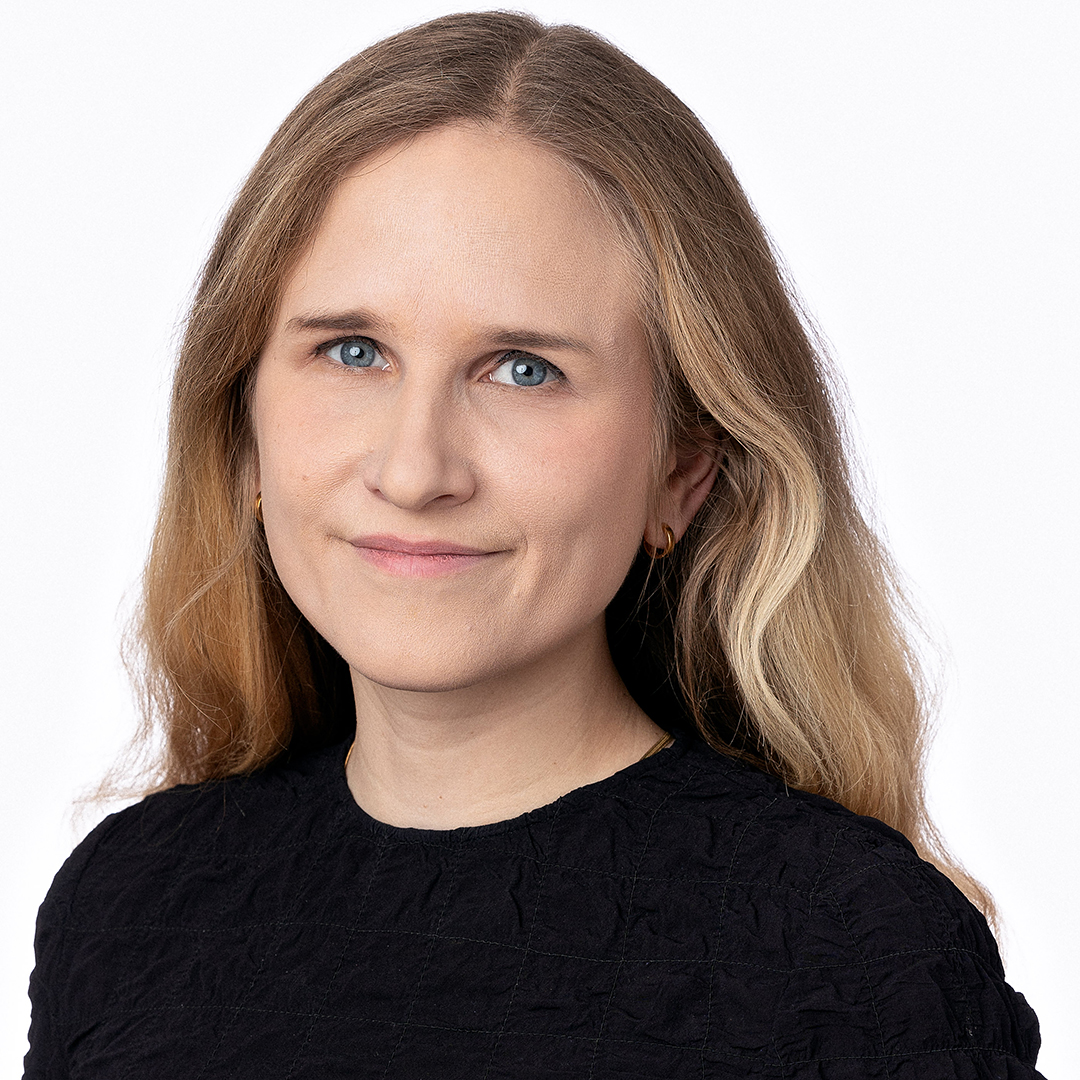
Dr. Minda Holm is a Senior Research Fellow at NUPI. Her research spans three main areas: the theory of international ideology and ideological resistance in world politics; global liberalisms and liberal internationalism, liberal exceptionalism and ideological and conceptual changes in global order, international norms, state ideals, sovereignty and international law; and the international ideology and networks of far-right and reactionary movements. She also works on diplomacy and foreign and security policy, particularly Norwegian, US and Russian. Her work is both theoretical and empirical, and situated in interdisciplinary dialogue with International Relations, global historical sociology, social theory, critical international law and political philosophy.
She has researched liberal internationalism and liberal exceptionalism, including in Norwegian foreign policy, and changing notions of sovereignty and state ideals in international law and politics. Since 2017, she has also researched far-right, national-conservative and reactionary movements and their global ideas. Between 2018 and 2023, she led a research project at NUPI for the Norwegian Ministry of Defence on the international ideology and networks of the ‘New Right’ in Europe, Russia and the US, and she was part of the research project World of the Right at the Danish Institute for International Studies (DIIS).
She holds a PhD in Political Science from the University of Copenhagen (2023). Her doctoral thesis, a monograph, is titled Towards a Social Theory of International Ideology, Ideological Scripts, and Counter-Ideology: Rethinking “Liberal International Order” and the Far Right’s Critique. It develops a theory of how ideologies structure the international through the state as a legal and political subject, and of the distinct forms of resistance this generates. She is currently developing it into a book proposal, and its core empirical arguments are summarized in the NUPI report A Postliberal Global Order? Challenge(r)s to the Liberal West (2025).
Holm has published in journals such as Review of International Studies, International Studies Review, Cooperation and Conflict, The Hague Journal of Diplomacy and New Perspectives, on topics including sovereignty, (mis)recognition, securitization theory, the transatlantic community of values and international diaspora politics.
For eight years, she wrote a monthly column on global politics in Dagsavisen and Klassekampen, and she was Editor-in-Chief of the journal Internasjonal Politikk between 2018 and 2024. Holm holds a double master’s degree in International Relations from LSE and George Washington University, where she was a Fulbright scholar.
See her personal website for more, including publications.
Expertise
Education
2018 – 2023 PhD, Department of Political Science, University of Copenhagen. Submitted November 2022, defended after maternity leave September 2023.
2015 – 2016 MA George Washington University, USA (Fulbright scholar)
2013 – 2014 MSc London School of Economics and Political Science, England
2008 – 2013 BA (2, in parallel), Political Science and Russia studies, University of Oslo and American University in Cairo, Oslo/Egypt
Work Experience
2025– Board Member, Norwegian Polytechnic Society’s Geopolitics Network
2023– Senior Research Fellow, NUPI
2020–2025 Columnist (global politics), Klassekampen
2018–2024 Editor-in-Chief, Internasjonal Politikk – Scandinavian Journal of International Studies
2018– Board Member, Human Rights House Foundation
2018–2023 PhD Fellow/Researcher and Project Leader (Norwegian Ministry of Defence), NUPI
2018–2023 PhD Fellow, University of Copenhagen (supervisors Ole Wæver and Ole Jacob Sending; submitted November 2022, defended September 2023 following parental leave)
2018–2023 PhD Fellow, World of the Right research project, Danish Institute for International Studies (DIIS; based in both Oslo and Copenhagen)
2018–2021 Board Member, European International Studies Association (EISA) Early Career Development Group
2017–2020 Columnist (global politics), Dagsavisen (“Internasjonalen”)
2017–2018 Research Fellow, NUPI
2015–2019 Board Member, Fulbright Alumni Association of Norway
2012–2017 Research Assistant, NUPI (full-time from January 2016)
2012 Intern, Organization for Security and Co-operation in Europe (OSCE), Tajikistan
2010–2011 Trainee, Norwegian Ministry of Foreign Affairs, Kazakhstan (covering Central Asia)
2009–2010 Journalist, Radio Nova
Aktivitet
Filter
Clear all filters
NUPIpoddden #15: Hvilken liberal orden?
Vi hører stadig at den internasjonale liberale orden er i krise. På den ene siden er den utsatt for press utenfra, fra stater som Russland og Kina...
NUPI team to take over as editors of the prestigious journal Cooperation and Conflict
Editorial: The New Right’s internationalism
The editorial team welcomes you to the final issue of 2021. For this issue, convened by Minda Holm, one of New Perspectives’ Associate Editors, we have brought together a group of invited essays on the Internationalism of the New Right. As an object of analysis for political science and International Relations, the New Right refers to intellectual movements that have emerged since the 1980s, including Reaganite economic conservatives, theorists and philosophers like Alexandr Dugin and Alain de Benoist, and political movements that have swept to power across the globe, but with particular successes in Central and Eastern Europe. Globally these movement include actors as diverse as Bolsonaro in Brasil, Modi in India, and Putin in Russia, and in Central and Eastern Europe are exemplified by Fidesz in Hungary and Prawo I Sprawiedliwosc in Poland. So far, academic conversations have happened mostly in parallel, rather than with each other, drawing seemingly different conclusions as to both who we are speaking of, and what their global ideas entail – both for world politics, and IR as a field (see Abrahamsen et al., 2020; Azmanova and Dakwar, 2019; De Orellana and Michelsen, 2019; Drolet and Williams, 2018). In this special issue, we bring together some leading voices to reflect on the transnational and international relations between these movements.
Russlands Kabul
Kremlin has over the last years had closer contact with Taliban.
Mistenkelig kritikk
Why is media so uncritical towards Norwegian foreign policy?
Chinese Anger Diplomacy (ANGER)
Do liberal-democratic states yield to public criticism by China? ANGER approaches this question by focusing on China's use of "anger diplomacy" - public, vehement displa...