Researcher
Minda Holm

Contactinfo and files
Summary
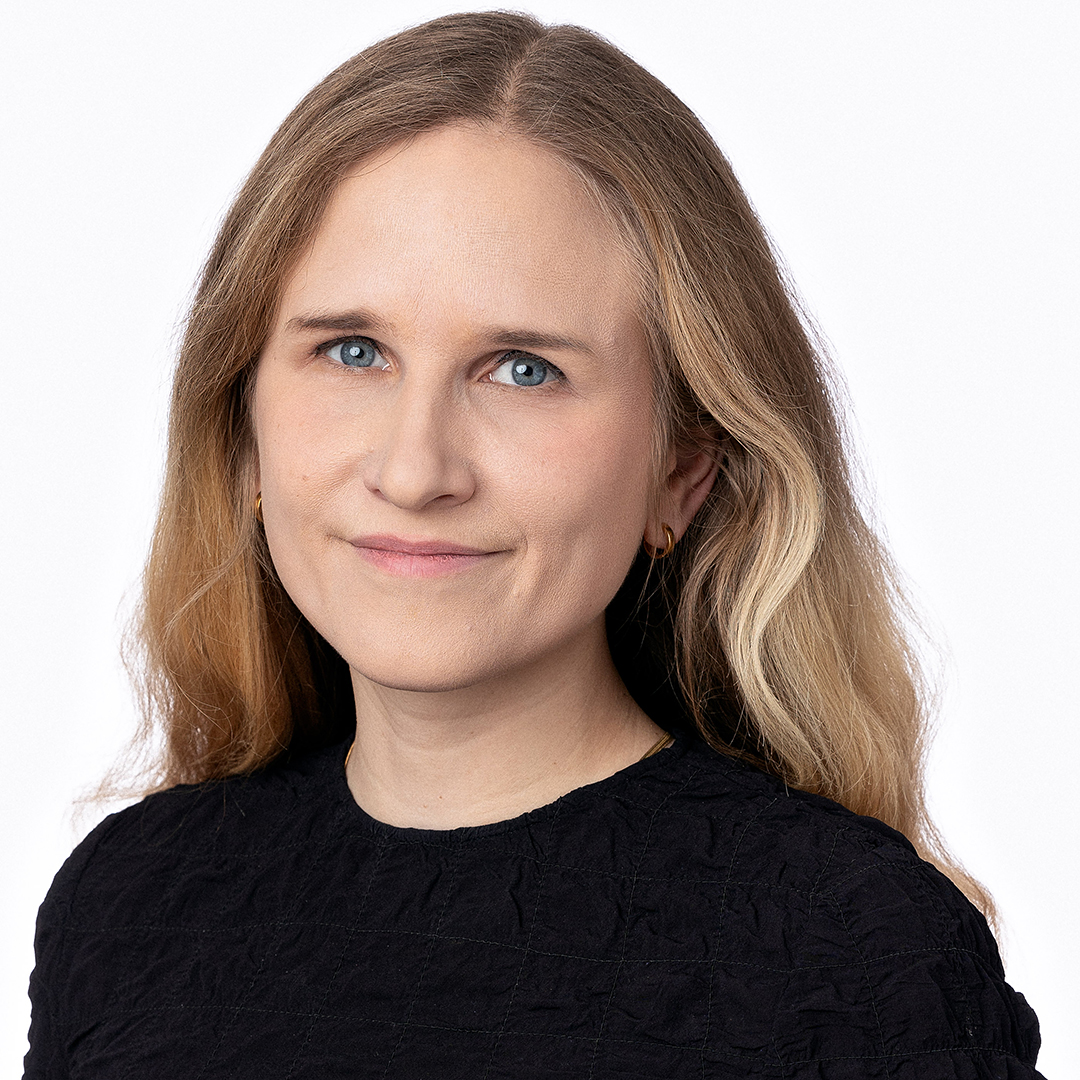
Dr. Minda Holm is a Senior Research Fellow at NUPI, working on questions of global order and global governance, ideology and ideological contestation, the function of different liberalisms and dominant state ideals in international politics historically and at the present time, the tensions between liberal-democratic values and security and warfare, the global ideas of illiberal, reactionary, radical right and antiliberal forces, and the different meanings of sovereignty, morality, and (mis)recognition in global politics. She works on these topics both theoretically (social and political theory), and empirically. She holds a PhD in Political Science from the University of Copenhagen (September 2023), with a monograph titled ‘Towards a Social Theory of International Ideology, Ideological Scripts, and Counter-Ideology. Rethinking ‘Liberal International Order’ and the Far Right’s Critique’. Whilst doing her PhD, she also worked at the Danish Institute of International Studies (DIIS), where she was a part of the project World of the Right. She was also the project leader between 2018-2023 on a research project that studied the international ideology and networks of the Far Right in Europe, Russia, and the US, and their implications for global order.
Holm has in parallel with writing her monograph published in journals such as Review of International Studies, International Studies Review, The Hague Journal of Diplomacy, and New Perspectives, in peer-reviewed anthologies, and in Scandinavian-language peer-reviewed outlets, on topics ranging from conceptual history and sovereignty, (mis)recognition and shifting state ideals within international law and politics, liberal exceptionalism, self-perceptions, and double standards, reactionary, radical right and illiberal visions of world politics, international diaspora politics, Norwegian, US, and Russian foreign policy and diplomacy, and historical and political changes within liberal internationalism. She has had a monthly column on global politics since 2017, since 2020 in Klassekampen. She holds a double master’s degree in international relations from the London School of Economics (LSE) and the George Washington University, where she was a Fulbright scholar. She has lived and studied in Egypt, Wales, Russia, the US, England, Kazakhstan, Tajikistan, and Denmark, and is a board member of the Human Rights House Foundation (2018- ). She was editor-in-chief of the Scandinavian peer-reviewed IR journal Internasjonal Politikk between 2018 and 2024. See her personal webpage for more, including publications.
Expertise
Education
2018 – 2023 PhD, Department of Political Science, University of Copenhagen. Submitted November 2022, defended after maternity leave September 2023.
2015 – 2016 MA George Washington University, USA (Fulbright scholar)
2013 – 2014 MSc London School of Economics and Political Science, England
2008 – 2013 BA (2, in parallel), Political Science and Russia studies, University of Oslo and American University in Cairo, Oslo/Egypt
Main work experience
2023 – Senior Research Fellow, NUPI
2018 – 2022 PhD Fellow, NUPI, University of Copenhagen and Danish Institute of International Studies (DIIS)
2017 – 2018 Research Fellow, NUPI
2012 – 2017 Research Assistant, NUPI (fulltime from January 2016)
2012 – 2012 Intern, Organization of Security and Cooperation in Europe (OSCE), Tajikistan
2010 – 2011 Trainee, Norwegian Ministry of Foreign Affairs, Kazakhstan (covering all of Central Asia)
2009 – 2010 Journalist, Radio Nova
Aktivitet
Filter
Clear all filtersHvor radikale er de egentlig? Om det populistiske radikale høyre som motideologisk prosjekt
How radical is the populist radical right really? On the populist radical right as a counter-ideological project.
Er vi iboende gode?
(Available in Norwegian only): Mektige stater anklager hverandre for være dobbeltmoralske, og verden blir et dårligere sted, skriver Minda Holm i denne Klassekampen-kronikken.
On the Double Exceptionalism of Liberal States
This chapter deals with dilemmas of current European Security Politics in relation to freedom of speech and liberal values more broadly, in what I call the ‘double exceptionalism’ of liberal security policy. Empirically, I focus on the Norwegian balance after the terrorist attack on 22 July 2011. The political foundation of West European societies is based in part on a set of liberal political values, whereby freedom of speech is central. As a value, it is seen as foundational to who “we” as members of a nation are, exemplified through a speech the Norwegian Prime Minister Jens Stoltenberg gave in response to the attack: “With the strongest of all of the weapons of the world, the free word and democracy, we will find the course for Norway after 22 July 2011”. At the time, the rhetorical response was applauded by commentators as an exemplary alternative to the typical security-centric response of governments to terrorist attacks. When faced with internal security dilemmas, the response from liberal-democratic states is typically to either enter into a “state of exception”, where some of the normal governing rules no longer apply, or where the laws are altered to enable non-liberal policies. The period after 9/11 and the increased focus on preventive security has been marked by a systematic role-back of liberal values in European societies, justified with the overarching need to protect lives first, values second. Since liberal values are seen as foundational attributes of the state, illiberal actions do not alter their liberal self-perception. This is the double exceptionalism of liberal states: the exceptionalism to transgress law and “normal politics”, and the exceptionalism to not let that transgression alter the identity one has construed as a liberal polity. This chapter discusses these dilemmas in the Norwegian, and how Norwegian governments dealt with the tension of differing logics between liberal identity and the politics of security.
What Liberalism? Russia’s Conservative Turn and the Liberal Order
Through a regime that increasingly promotes a conservative domestic agenda and at times portrays the West as decadent and lost, the Russian state has been cast as the front man in a new international conservative revolt. Yet, calling the Russian state ‘anti-liberal’ misses the complexity of its critique of liberal international politics. This essay argues that the ‘anti-liberalism’ of the current and in many ways radically conservative Russian state is one directed at the particular form of anti-pluralist and internationalist liberalism associated with the ‘benchmark date’ of 1989 and the period of liberal triumphalism that followed – not at the system of regulated state sovereignty laid down after 1945, known as ‘liberal order’. While the current Russian state clearly challenges central aspects of liberalism at home, and echoes Schmittian realism in several regards, the state also relies on a specific interpretation of concepts such as sovereignty and non-interference that historically were part of a more stability-oriented, conservative liberal international vision. Exploring exactly ‘what liberalism’ it is that Russia is increasingly defying, the essay opens up an important space to historicize and interrogate what post-1945 liberal memory is, how such memory is currently being re-negotiated by a New Western Right, and what Russia has got to do with it.
Hvilken liberal orden?
The West has to critically examine its own contributions to the crisis of the 'liberal order'.
Hvordan påvirker pandemien den liberale orden?
Covid-19 puts more pressure on the liberal order.
Ytre høyre normaliseres
The far right is increasingly normalised, and gets away with it - also in Norway.
Brothers in Arms and Faith? The Emerging US-Central and Eastern Europe ‘Special Relationship’
In this policy note, we explore the nature, strength and tensions of the contemporary US-Central Eastern Europe relationship. We describe the expanding US-CEE ‘brotherhood in arms’: growing trade relations, intensified military cooperation, and rekindled diplomatic ties. Further, we unpack the striking and largely ignored dimensions of the US-CEE ‘brotherhood in faith’: the many ways in which the United States and Central and Eastern Europe are tied together by overlapping ideologies of national conservatism and a particular version of Christian ‘family values’. This involves addressing the complexities of an increasingly influential and ambitious Visegrád Group, whose key players – Poland and Hungary – may be brothers, but are by no means twins. It also means raising some broader, burning discussions about the future of NATO and the meaning of ‘Europe’. Universalist, multicultural and postnational? Or conservative, Christian and sovereigntist?
Om å være kvinne i akademia
Reflections on being a woman in academia. Published in longer version with Forskerforum, Agenda Magasin and Nupi.no.
Drømmen om å gjenkristne Europa
The political leadership in Hungary, Poland and Russia talks of protecting Christians abroad - and about saving Europe from itself.