Researcher
Minda Holm

Contactinfo and files
Summary
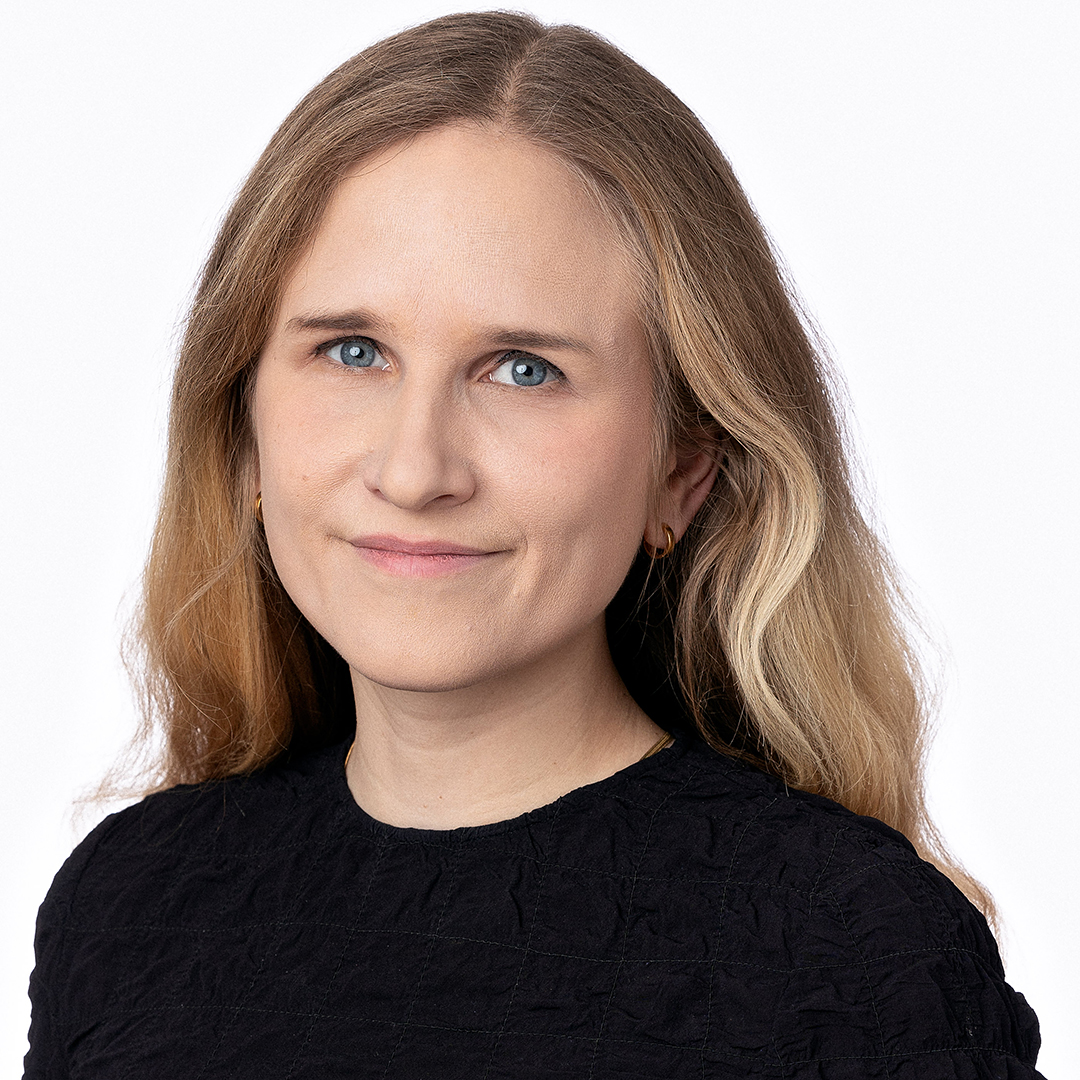
Dr. Minda Holm is a Senior Research Fellow at NUPI, working on questions of global order and global governance, ideology and ideological contestation, the function of different liberalisms and dominant state ideals in international politics historically and at the present time, the tensions between liberal-democratic values and security and warfare, the global ideas of illiberal, reactionary, radical right and antiliberal forces, and the different meanings of sovereignty, morality, and (mis)recognition in global politics. She works on these topics both theoretically (social and political theory), and empirically. She holds a PhD in Political Science from the University of Copenhagen (September 2023), with a monograph titled ‘Towards a Social Theory of International Ideology, Ideological Scripts, and Counter-Ideology. Rethinking ‘Liberal International Order’ and the Far Right’s Critique’. Whilst doing her PhD, she also worked at the Danish Institute of International Studies (DIIS), where she was a part of the project World of the Right. She was also the project leader between 2018-2023 on a research project that studied the international ideology and networks of the Far Right in Europe, Russia, and the US, and their implications for global order.
Holm has in parallel with writing her monograph published in journals such as Review of International Studies, International Studies Review, The Hague Journal of Diplomacy, and New Perspectives, in peer-reviewed anthologies, and in Scandinavian-language peer-reviewed outlets, on topics ranging from conceptual history and sovereignty, (mis)recognition and shifting state ideals within international law and politics, liberal exceptionalism, self-perceptions, and double standards, reactionary, radical right and illiberal visions of world politics, international diaspora politics, Norwegian, US, and Russian foreign policy and diplomacy, and historical and political changes within liberal internationalism. She has had a monthly column on global politics since 2017, since 2020 in Klassekampen. She holds a double master’s degree in international relations from the London School of Economics (LSE) and the George Washington University, where she was a Fulbright scholar. She has lived and studied in Egypt, Wales, Russia, the US, England, Kazakhstan, Tajikistan, and Denmark, and is a board member of the Human Rights House Foundation (2018- ). She was editor-in-chief of the Scandinavian peer-reviewed IR journal Internasjonal Politikk between 2018 and 2024. See her personal webpage for more, including publications.
Expertise
Education
2018 – 2023 PhD, Department of Political Science, University of Copenhagen. Submitted November 2022, defended after maternity leave September 2023.
2015 – 2016 MA George Washington University, USA (Fulbright scholar)
2013 – 2014 MSc London School of Economics and Political Science, England
2008 – 2013 BA (2, in parallel), Political Science and Russia studies, University of Oslo and American University in Cairo, Oslo/Egypt
Main work experience
2023 – Senior Research Fellow, NUPI
2018 – 2022 PhD Fellow, NUPI, University of Copenhagen and Danish Institute of International Studies (DIIS)
2017 – 2018 Research Fellow, NUPI
2012 – 2017 Research Assistant, NUPI (fulltime from January 2016)
2012 – 2012 Intern, Organization of Security and Cooperation in Europe (OSCE), Tajikistan
2010 – 2011 Trainee, Norwegian Ministry of Foreign Affairs, Kazakhstan (covering all of Central Asia)
2009 – 2010 Journalist, Radio Nova
Aktivitet
Filter
Clear all filtersMutual Lack of Introspection and the ‘Russia Factor’ in the Liberal West
Minda Holm makes three claims in this article: one about the representation of Russia as an external enemy and the reflex to blame Russia for unwanted domestic developments; one about the liberal Western Self’s continuous violation of the principles it judges others by; and one about the seemingly deliberate lack of critical introspection amongst Russian and Western elites. The Western Self is largely viewed as liberal by default, irrespective of the extensive illiberal actions – seen in, for example, the post-9/11 era. Whereas politics is messy and full of contradictions, Western liberal morality is often presented as somehow standing monolithically above those contradictory actions: despite torture, a secret extraordinary rendition and detention program and wide-ranging breaches of international law, the US Self under Bush Jr. remained decidedly ‘good’. Whilst the Self’s identity as liberal persists despite violating those liberal principles, states such as Russia are stigmatized for the same types of violations. That this creates frustration with those defined as standing on the outside or, better, denied access to the true inside, should not come as a surprise. But, Russia’s continuous denialism and whataboutism, and the role of academics in this negative cycle, doesn’t bode well for the future of Russia-West relations.
Farlige forbindelser?
Den påståtte koblingen mellom franske høyrenasjonalister og Kreml er overdrevet. Men de felles interessene er der.
Taliban i Moskva og Doha
Forrige uke møttes en delegasjon fra Taliban og sentrale afghanske politikere til samtaler i Moskva. Møtet var det mest omfattende av sitt slag siden 2001, året da USA gikk til krig mot Taliban. Møtet kom like etter at Taliban har vært i banebrytende forhandlinger med USA i seks dager i Doha, Qatar. For første gang ble Taliban og USA enige om et utkast til et mulig rammeverk for fred.
A Conceptual History of International Relations (CHOIR)
The purpose of CHOIR is to investigate taken-for-granted concepts of international relations. ...
Forum: In the beginning there was no word (For It): Terms, concepts, and early sovereignty
It is difficult to overstate the importance of the concept sovereignty for international relations (IR). And yet, understanding the historical emergence of sovereignty in international relations has long been curtailed by the all-encompassing myth of the Peace of Westphalia. While criticism of this myth has opened space for further historical inquiry in recent years, it has also raised important questions of historical interpretation and methodology relevant to IR, as applying our current conceptual framework to distant historical cases is far from unproblematic. Central among these questions is the when, what, and how of sovereignty: from when can we use “sovereignty” to analyze international politics and for which polities? Can sovereignty be used when the actors themselves did not have recourse to the terminology? And what about polities that do not have recourse to the term at all? What are the theoretical implications of applying the concept of sovereignty to early polities? From different theoretical and methodological perspectives, the contributions in this forum shed light on these questions of sovereignty and how to treat the concept analytically when applied to a period or place when/where the term did not exist as such. In doing so, this forum makes the case for a sensitivity to the historical dimension of our arguments about sovereignty—and, by extension, international relations past and present—as this holds the key to the types of claims we can make about the polities of the world and their relations.
States before relations: On misrecognition and the bifurcated regime of sovereignty
The symbolic structure of the international system, organised around sovereignty, is sustained by an institutional infrastructure that shapes how states seek sovereign agency. We investigate how the modern legal category of the state is an institutional expression of the idea of the state as a liberal person, dependent on a one-off recognition in establishing the sovereign state. We then discuss how this institutional rule co-exists with the on-going frustrated search for recognition in terms of socio-political registers. While the first set of rules establishes a protective shield against others, regardless of behaviour, the second set of rules specify rules for behaviour of statehood, which produces a distinct form of misrecognition. States are, at one level, already recognised as sovereign and are granted rights akin to individuals in liberal thought, and yet they are continually misrecognised in their quest to actualise the sovereign agency they associate with statehood. We draw on examples from two contemporary phenomena - fragile states, and assertions of non-interference and sovereignty from the populist right and non-Western great powers, to discuss the misrecognition processes embedded in the bifurcated symbolic structure of sovereignty, and its implications for debates about hierarchy and sovereignty in world affairs.
Hatet mot George Soros
(Available in Norwegian only): Ingen enkeltperson er hatet så mye av både det nasjonalistiske og ekstreme høyre som ungarsk-amerikanske George Soros.
Familien i internasjonal politikk
(Available in Norwegian only). «Tradisjonelle familieverdier» blir stadig oftere brukt for å rettferdiggjøre systematisk stigmatisering av homofile i vidt forskjellige land verden over.
Visions of an Illiberal World Order? The National Right in Europe, Russia and the US
The rise of a national Right in both Europe and the US is disrupting the security agendas of Western foreign– and defense ministries. Long accustomed to directing the gaze and measures of Western security only outwards – towards Africa, the Middle East, China – these centers of policy formulation now find themselves forced to confront a more introspective line of questioning: Is the identity of ‘the liberal West’ and its agenda of a rule-based, institutionalized world order under threat from within? In this brief we unpack the visions of world order espoused by the new Western Right, its ideological overlap with conservative ideas in Putin’s Russia, as well as the built-in tensions and uncertainties of that emerging alliance. Our focus is on potential implications of these political developments for i) international institutionalism, and ii) interventionism. In short, we argue that anti-globalism must not be mistaken for anti-internationalism. The most basic political agenda of the national Right – from the Trumpian US to Putin’s Russia – is one of battling globalism and its liberal vision of a trans-national or cosmopolitan world order, by defending older Western concepts of sovereignty-centred, inter-national co-existence. In contrast to the extreme Right, the current European-US-Russian alliance of national Right politicians largely want to fight this battle from the inside and through, not outside, established institutions such as the UN and the EU.
Norge, USA og folkeretten
(Available in Norwegian only): Når det gjelder USA og folkeretten, er problemet ikke så mye Trump, som at USA konsekvent bryter de verdiene de selv forfekter, skriver Minda Holm i denne kronikken.