Researcher
Kari M. Osland

Contactinfo and files
Summary
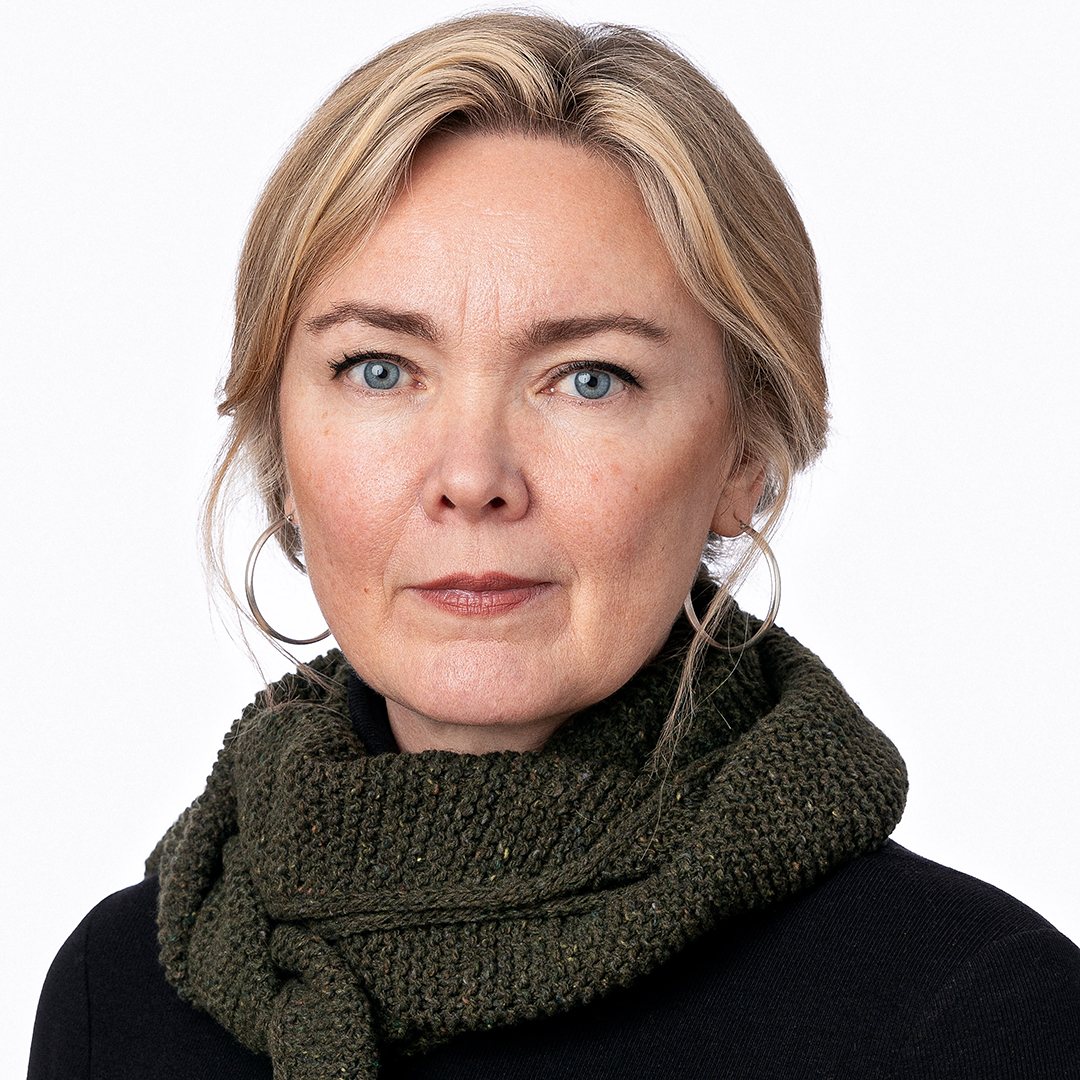
Kari Margrethe Osland (PhD) is the Director of NUPI.
Osland’s work has predominantly focused on conflict dynamics, insurgencies, peace operations and peace building. Osland wrote her PhD on the impact of international assistance to police reform in post-conflict countries, comparing Afghanistan, Bosnia and Herzegovina, Kosovo, Serbia and South Sudan. She wrote her MPhil on genocide, applying the securitization theory on the cases of Rwanda and Bosnia and Herzegovina.
She has done consultancy work for the UN, the Norwegian Ministry of Foreign Affairs and for the Norwegian Police Directorate, in particular on international policing, rule of law and Security Sector Reform. She has field work experience from the Balkans (30+), Afghanistan (2) and a number of African countries (Niger, South Sudan, Sudan).
Expertise
Education
2014 PhD, Political Science, University of Oslo
2000 Cand. polit., (political science and social anthroplogy), University of Bergen
Work Experience
2023- Director, NUPI
2014-2023 Senior Research Fellow, NUPI
2014-2020 Head of the Research group for peace, conflict and development, NUPI
2008-2014 PhD candidate (incl. 33 months of maternity leave)
2004-2008 Research Fellow, UN Programme/Department of International Affairs, NUPI
2001-2002 Coordinator for the Nordic research group on Peace Support Operations
2000-2004 Researcher & head of UN Programme, Department of International Politics, NUPI
1998-2000 Coordinator and scientific assistant, UN Programme, NUPI
Aktivitet
Filter
Clear all filters
NATO 3.0 and the role of Ukraine
The European pillar in NATO is strengthened as US is gradually withdrawing its support to security on the continent. What part will Ukraine play?
When jihadists govern: Lessons across the Sahel cases
Fifteen years of international engagement have failed to halt the rise of jihadist insurgency in the Sahel. The Jihadist Governance in the Sahel (JIGOV-Sahel) research project shows that neither the absence of the state nor the insurgents’ ideological commitment alone is the cause. The state is present in ways that generate resistance, and jihadists govern because they fulfil functions the state does not. Norwegian and international strategies should move away from a military-first response and from the restoration of the same state, and towards assistance that strengthens state legitimacy, services, and rule of law in the daily lives of citizens.
Breakfast seminar: Challenges with organizing post-war elections in Ukraine
This seminar will provide a space for informed discussion on the legal, operational, security and societal dimensions of post-war electoral preparedness in Ukraine.
How to prevent a direct conflict between Russia and NATO?
How can a direct conflict between Russia and NATO be prevented? This seminar examines the pathways that could lead to war in Europe and the measures that might reduce the risk of escalation.
Krise og krig: Hva gjør Norge?
Akkurat nå føles det som at utenrikspolitikk ikke lenger er noe som “skjer der ute”, men at det angår hver og en av oss. Valgene som tas nå, er he...
A Norwegian Reflection on Human Security in a Changing Geopolitical Landscape
What insights can we gain from the Human Security tradition to guide how we adapt our understanding and approaches to domestic and global security to a changing geopolitical landscape?
Resilience, Peacebuilding, and Preventing Violent Extremism: A Complex Systems Perspective on Sustaining Peace
How can resilience and peacebuilding help address the root causes of violent extremism? This seminar marks the Norwegian book launch of a new volume exploring this challenge.