Researcher
John Karlsrud

Contactinfo and files
Summary
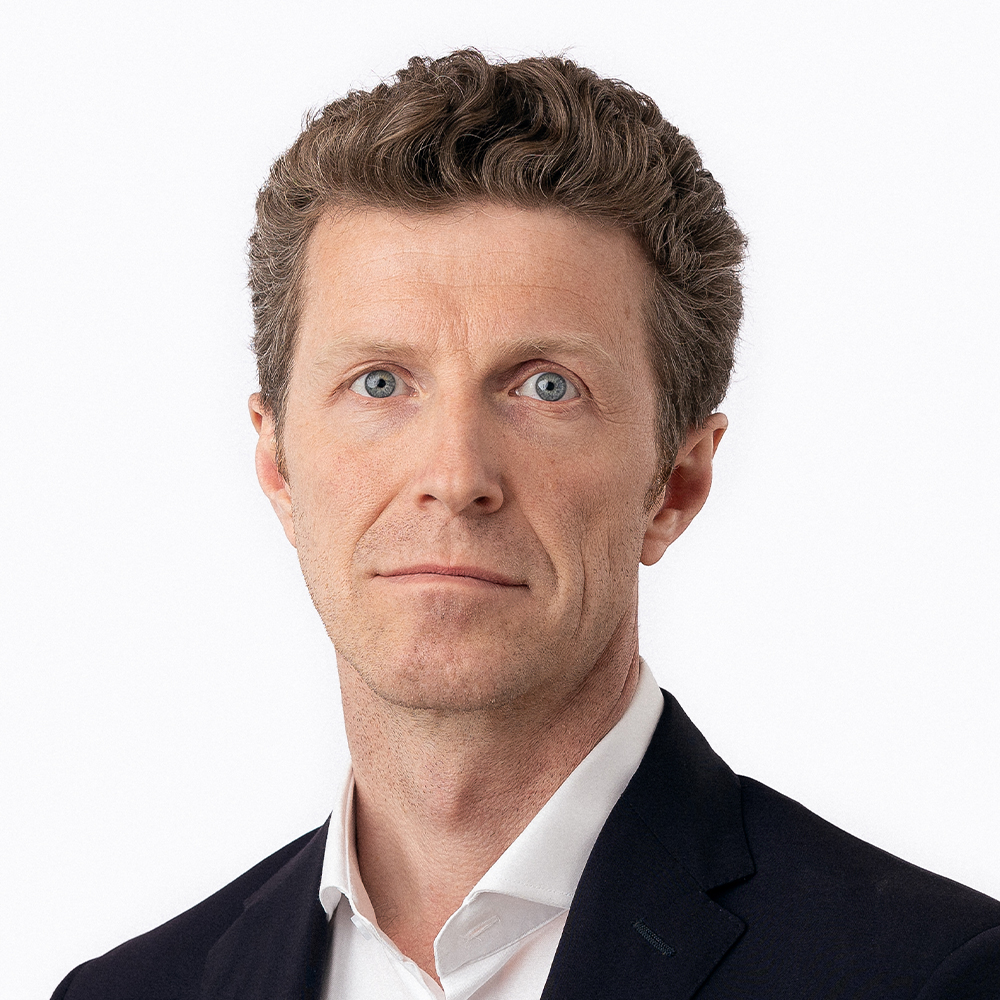
John Karlsrud is a Research Professor in the Research group on peace, conflict and development, where he works on coalitions in international security, UN peacekeeping as well as issues related to change in global governance more broadly. He has published a number of books, articles and policy reports on these topics.
Karlsrud earned his PhD at the University of Warwick, and has been a Visiting Fulbright Fellow at the Center on International Cooperation at New York University and a visiting fellow at the European University Institute. He has worked in Bosnia and Hercegovina, Chad, Palestine (West Bank), Norway and USA, and conducted field research and shorter missions to Haiti, Iraq, Liberia, Mozambique, Serbia, Sierra Leone, South Sudan and Ukraine.
Expertise
Education
2014 Senior Executive Course 13, Norwegian Defence University College, Aug-Nov 2014
2010-2014 Ph.D., Politics and Internationals Studies, University of Warwick. Title: Linked Ecologies and Norm Change in United Nations Peacekeeping Operations
2005 Master of Peace and Conflict Studies / International Affairs with Distinction Joint Master from Institute for Graduate Studies in International Affairs, Australian National University and the Peace Research Centre of Oslo
Work Experience
2020- Head of the Reserach group on peace, conflict and development
2015- External Associate, Centre for the Study of Globalisation and Regionalisation, University of Warwick 2015 Fulbright Visiting Fellow, Center on International Cooperation, New York University
2012 Lecturer, IR Master
2010- Programme Manager and Senior Research Fellow at Norwegian Institute of International Affairs (NUPI)
2010- Senior Research Fellow, NUPI
2008-2010 Special Assistant to the Special Representative of the Secretary General (SRSG), United Nations Mission in Chad and the Central African Republic (MINURCAT), Chad
2006-2008 Policy and Strategy Analyst, Strategic and Regional Initiatives Unit (SRIU), Regional Bureau for Africa (RBA), UNDP New York HQ
2005-2006 Researcher and Assistant to the Managing Director, Fafo Institute for Applied International Studies (AIS)
2002-2003 Liaison and Operations Officer for NATO in Bosnia and Hercegovina (BiH), seconded by the Norwegian Army
Aktivitet
Filter
Clear all filtersUN Peace Operations, Terrorism, and Violent Extremism
There are practical and financial reasons to give UN peace operations more robust mandates and mitigate and respond to violent extremism and terrorism. But the idea of UN peacekeepers conducting counter-terrorism operations is not without its challenges. Karlsrud argues that UN peace operations neither are, nor will be ready operationally, doctrinally, or politically to take on counter-terrorism tasks. Such a development could jeopardise the legal protection of UN staff; remove the ability of the UN to be an impartial arbiter of the conflict; and strongly undermine the ability for other parts of the UN family to carry out humanitarian work. However, peace operations should, in cooperation with the UN Country Team, strengthen their conflict prevention and early peacebuilding agenda, to remove root causes for radicalisation.
Effectiveness of Peace Operations Network (EPON)
NUPI together with 40 partners from across the globe have established an international network to undertake research into the effectiveness of peace operations. ...
Implementation in practice: The use of force to protect civilians in United Nations peacekeeping
Since the failures of the United Nations of the early 1990s, the protection of civilians has evolved as a new norm for United Nations peacekeeping operations. However, a 2014 United Nations report found that while peacekeeping mandates often include the use of force to protect civilians, this has routinely been avoided by member states. What can account for this gap between the apparently solid normative foundations of the protection of civilians and the wide variation in implementation? This article approaches the question by highlighting normative ambiguity as a fundamental feature of international norms. Thereby, we consider implementation as a political, dynamic process where the diverging understandings that member states hold with regard to the protection of civilians norm manifest and emerge. We visualize this process in combining a critical-constructivist approach to norms with practice theories. Focusing on the practices of member states’ military advisers at the United Nations headquarters in New York, and their positions on how the protection of civilians should be implemented on the ground, we draw attention to their agency in norm implementation at an international site. Military advisers provide links between national ministries and contingents in the field, while also competing for being recognized as competent performers of appropriate implementation practices. Drawing on an interpretivist analysis of data generated through an online survey, a half-day workshop and interviews with selected delegations, the article adds to the understanding of norms in international relations while also providing empirical insights into peacekeeping effectiveness.
Predictive peacekeeping: opportunities and challenges
The time is ripe for the development of a UN early warning tool that estimates the likelihood of instability, intercommunity clashes and armed violence in areas in which UN peacekeepers operate. However, this development would require at least some initial collaboration between the UN and the scientific world. Scientists have developed advanced analytical tools to predict armed violence in recent years.1 Yet, these conflict prediction tools still cannot be utilized to their full potential because of a relatively poor quality of conflict data. It is precisely in the area of high quality conflict data that the UN has a strong comparative advantage,2 especially now that the Situational Awareness Geospatial Enterprise (SAGE) system is being implemented. SAGE is a web-based database system that allows UN military, police and civilians in UN peace operations (both UN peacekeeping operations and special political missions) to log incidents, events and activities. The development of SAGE has made it possible to leverage state of the art methodological tools to enable predictive peacekeeping. This policy brief provides background to the recent turn to using data in UN peacekeeping missions, suggestions for what an early warning tool based on SAGE data would look like, and discusses the practical and ethical challenges of such an early warning tool.
From Liberal Peacebuilding to Stabilization and Counterterrorism
Since the end of the Cold War, international interventions have increasingly been deployed to deal with internal conflict. Liberal peacebuilding has been a guiding concept for many of these interventions, in particular those deployed by the UN. This article argues that liberal peacebuilding is waning in importance, both as a guiding concept and in practice. After long engagements in Afghanistan and the enduring effects of the financial crisis, Western states are shifting their strategy from liberal peacebuilding to stabilization and counterterrorism. In Africa, regional ad hoc coalitions set up to fight terrorists and other armed groups are on the rise, and progressively included in UN peacekeeping operations. To examine these shifts more closely, the article focuses on the crisis in Mali since 2012 and the growing Western security presence in neighbouring Niger. The article concludes that the turn from liberal peacebuilding to stabilization and counterterrorism is likely to be counterproductive, as it will lead to more oppressive governments and more disillusioned people joining the ranks of opposition and terrorist groups, as well as undermine the UN in general and UN peace operations in particular.
Are UN Peacekeeping Missions Moving Toward "Chapter Seven and a Half Operations"?
The combined effect of the inclusion of regional ad hoc coalitions with a strong orientation towards counter-insurgency and counterterrorism is the creation of a new type of “Chapter Seven and a Half” operations. Enforcement action is delegated to regional ad hoc coalitions that have a stronger interest in the conflict and who are more willing to put troops in the line of fire. However, such a development risks undermining the legitimacy of the UN, increasing attacks against peacekeeping operations as well as other parts of the UN, and eroding its role in the mediation and humanitarian domains.
The UN at War: Peace Operations in a New Era
This book is a critical political and institutional reflection on UN peace operations. It provides constructive suggestions as to how the UN and the international system can evolve to remain relevant and tackle the peace and security challenges of the 21st century, without abandoning the principles that the UN was founded upon and on which the legitimacy of UN peace operations rests. The author analyses the evolving politics on UN peace operations of the five veto powers of the UN Security Council, as well as major troop-contributing countries and western powers. He investigates the move towards peace enforcement and counter-terrorism, and what consequences this development may have for the UN. Karlsrud issues a challenge to practitioners and politicians to make sure that the calls for reform are anchored in a desire to improve the lives of people suffering in conflicts on the ground—and not spurred by intra-organizational turf battles or solely the narrow self-interests of member states. Finally, he asks how the UN can adapt its practices to become more field- and people-centered, in line with its core, primary commitments of protecting and serving people in need. “An excellent resource for researchers, policy-makers, practitioners and students, this work provides a very useful analysis on the past, present and future of peace missions, as well as how they have and could face the challenges of today’s world.” —Séverine Autesserre, Associate Professor, Barnard College,Columbia University, USA “The international community and the new Secretary-General will have a chance to initiate meaningful, transformative reforms in the way the United Nations addresses social, political and security challenges; the road map is provided by John Karlsrud, highly recommended to all international peace and security academics and practitioners.” —José Ramos-Horta, Nobel Peace Prize laureate and former President and Prime Minister of Timor Leste “This is the most current, up-to-date assessment of UN Peace Operations available. A must-read for both analysts and practitioners of peacekeeping.” —Lise Morjé Howard, Georgetown University, USA
Between self-interest and solidarity: Norway’s return to UN peacekeeping?
This edited volume provides a comprehensive analysis of European approaches to United Nations peacekeeping by assessing past practice, present obstacles and future potentials related to nine core European countries’ contributions to blue helmet operations. By providing in-depth case studies on Denmark, France, Germany, Ireland, Italy, Norway, Sweden, The Netherlands and the United Kingdom, this book offers an evaluation of European approaches as well as a wide range of facilitating and constraining factors related to the above mentioned countries’ future involvement in UN peacekeeping. The book places particular emphasis on the recent involvement of European countries in the UN operation in Mali (MINUSMA) and explores to what extent this experience might lead to further marked increases of European supplies of troops and capabilities and thus a broader ‘European return’ to UN peacekeeping. Each chapter offers an up-to-date case study on key countries’ policies, challenges and opportunities for a stronger re-engagement in UN Peacekeeping It provides a comprehensive analysis of the main challenges and concrete ways ahead for overcoming institutional, political, financial and military obstacles (both at European capitals and within the UN system) on the path towards a stronger re-engagement of European troop contributing countries in the field of UN Peacekeeping. Furthermore, each chapter includes a set of policy-relevant recommendations for future ways ahead. The chapters in this book were originally published in International Peacekeeping.
Support to UN Peace Operations: Ensuring More Effective UN Peace Operations (UNPO)
The aim of the UNPO-project is to strengthen the ability of UN peacekeeping and other peace operations to respond to global security challenges, adapt to a changing global order, and c...
Plug and Play: Multinational Rotation Contributions for UN Peacekeeping Operations
In January 2016, Norway deployed a C-130 military transport aircraft to the UN mission in Mali (MINUSMA). Given the number of attacks on patrols and logistics convoys of MINUSMA, which has been called ‘the world’s most dangerous UN mission’, a military transport aircraft like the C-130 is considered a critical enabler to the UN mission, whose ability to operate safely and carry out its mandate has often been limited by the lack of air assets. From the beginning of the mission in July 2013, European troop-contributing countries (TCCs) have provided military aircrafts (C-130s and smaller C-160s and C-295s), but the difference between these and the 2016 deployment was that the latter was longer term, providing more predictability for the UN since it would be part of a multinational rotation contribution (MRC) initiated by Norway, followed by Portugal, Denmark, Sweden and Belgium.