Researcher
Tine Gade

Contactinfo and files
Summary
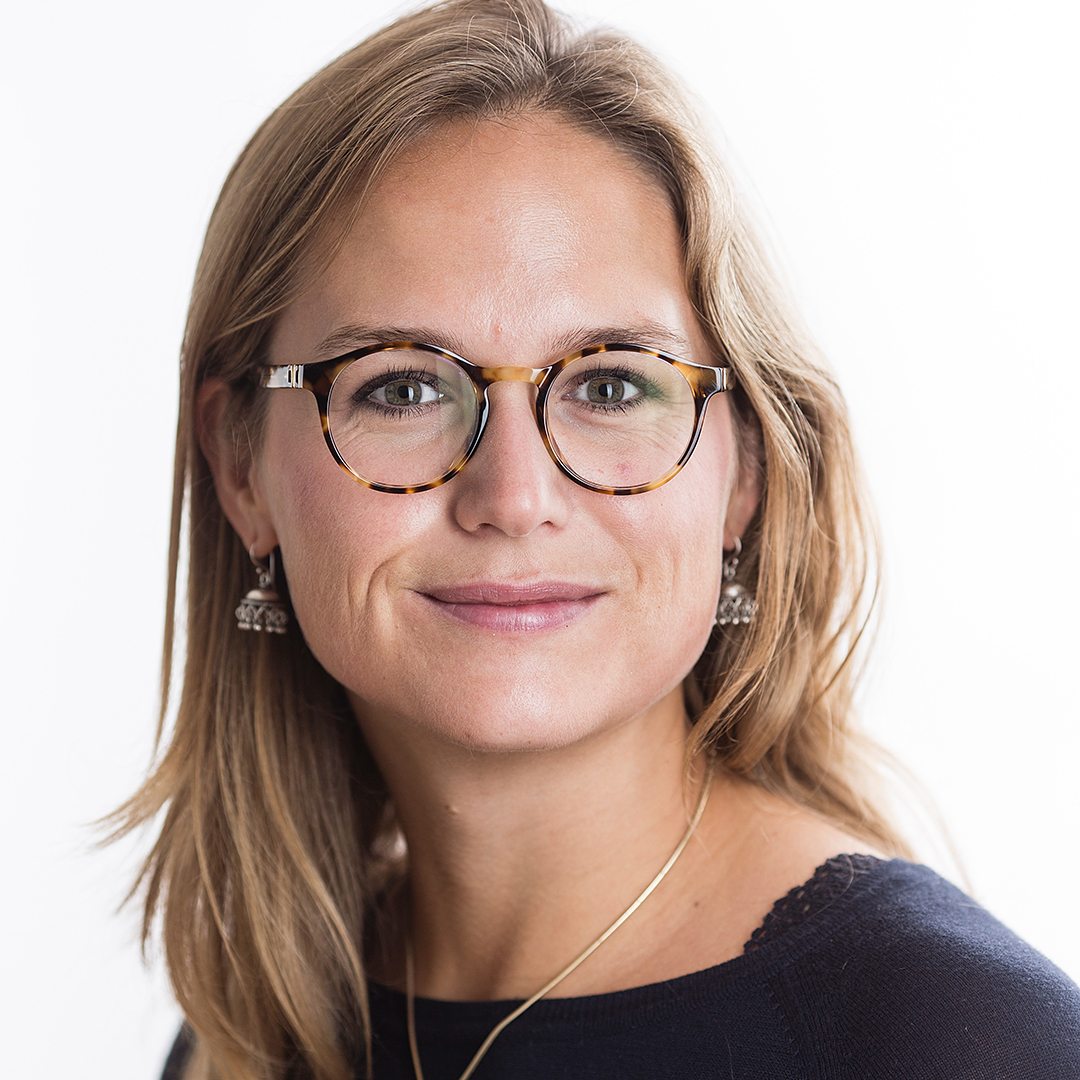
Tine Gade is Senior Research Fellow in NUPI’s Research Group on Peace, Conflict and Development.
She holds a PhD in political science from Institut d’Études Politiques (Sciences Po) in Paris. Her work focuses on urban sociology in the Levant; Islamism; violent extremism; governance of religion; civil-military relations; and judicial reform in Lebanon, Syria, Iraq, and Saudi Arabia. She has conducted fieldwork in Lebanon (2008), northern Iraq (2016), Saudi Arabia (2023), and also has experience from Syria and Egypt.
Her work includes Sunni City: Tripoli from Islamist Utopia to the Lebanese Revolution (Cambridge University Press, 2022) and How Lebanon’s security sector works amidst state collapse (Mediterranean Politics, 2025).
Gade is currently the project leader of the project Reactions to state regulation of Islam in times of Daesh (STATEISLAM), funded by the Research Council of Norway’s Researcher Project for Early Career Scientists (FRIPRO) (2021-2026), and also participates in other projects, including Russian Repertoires of Power in the MENA region (RUSMENA). Gade was previously a Max Weber postdoctoral fellow at the European University Institute in Florence, and a senior lecturer at the Department of Culture Studies and Oriental Languages at the University of Oslo.
Expertise
Education
2008 - 2014 PhD in Political Science (summa cum laude), Centre de Recherches Internationales (CERI), Institut d'Études Politiques de Paris (Sciences Po), France. Title: The crisis of the political-religious field in Tripoli, Lebanon (1967-2011)
2007 - 2008 Research Master in Comparative Politics, Specialization "Muslim World". Institut d'Études Politiques de Paris (Sciences Po), France
Work Experience
2016 - Senior Research Fellow, Norwegian Institute for International Affairs (NUPI)
2016 - 2018 Max Weber Post-doctoral Fellow, RSCAS, European University Institute
2015 - 2017 Associated doctor, CERI, Sciences Po Paris
2015 - 2016 Senior Lecturer, Department of Culture Studies and Oriental Languages, Faculty of Social Sciences, University of Oslo
2014 Lecturer, Department of Culture Studies and Oriental Languages, Faculty of Social Sciences, University of Oslo
2008 - 2013 Instructor, Sciences Po Paris University College
2008-2011 Funded PhD student (“Allocataire de recherche”), SciencesPo Paris-CERI
Aktivitet
Filter
Clear all filters
Breakfast seminar: Rethinking Red Sea Security: Toward a Cooperative Regional Framework
The Red Sea sits at the intersection of geopolitical rivalry, maritime insecurity, and global trade. What pathways are there toward greater cooperation and stability in the region?
Book launch: America’s Middle East
NUPI invites you to a book launch with Marc Lynch and his new book America’s Middle East: The Ruination of a Region.
How Lebanon’s security sector works amidst state collapse
This paper examines how hybrid security orders in Lebanon were renegotiated during shocks, specifically the state collapse from 2019 to 2023 and the regional war in 2023–2024. It employs the framework of Areas of Limited Statehood to analyse the coexistence of formal and informal governance amid the Lebanese state’s challenges. The study contributes to the understanding of governance by focusing on ‘state effects’ – the tangible practices that emerge in such contexts. The analysis reveals that Lebanon’s hybrid security system employed flexible, bottom-up strategies to cope with the economic collapse, such as relying on international security assistance, circumventing regulations, downsizing activities and rent seeking. However, increased corruption risks undermining the stability these solutions initially provided. Additionally, the paper discusses the Lebanese army’s expanded role in the aftermath of the recent conflict with Israel, highlighting its challenges in enforcing UN Security Council Resolution 1701 while maintaining internal cohesion amid rising discontent among Hizbullah supporters.
Breakfast seminar: How the former jihadis who took over Damascus embraced politics and toppled the Assad regime
The Assad-family has ruled over Syria for more than 50 years. In December, it took opposition groups less than two weeks to overthrow the regime.
Policy brief summarising the EU and other stakeholder’s prevention strategy towards violent extremism in the region, Middle East
The EU-Middle East and North Africa (MENA) Preventive Violent Extremism (PvE) co-operation is wide-ranging, and has been since a formalized partnership between the EU and MENA countries was outlined in the 1995 Barcelona Declaration. It has nevertheless received added attention following numerous terrorist attacks within the EU during the last decade; and European foreign fighters have been linked to the attacks in Paris in 2015; in Brussels, Berlin, and Nice in 2016; and in Manchester, London, and Barcelona in 2017.
International Human Rights Law and Islamic Law: A Synthesis of Revelation and Reason in Saudi Arabia Legal Regime
At this seminar Dawood Adesola Hamzah will present his book on international law and Muslim states, with a focus on Saudi Arabia.
Bad ideas have wings too: Understanding the resilience of jihadi ideas
How has Sayyid Qutb’s book 'Milestones' inspired radical youth and armed JIhadi groups around the world?