Researcher
Tine Gade

Contactinfo and files
Summary
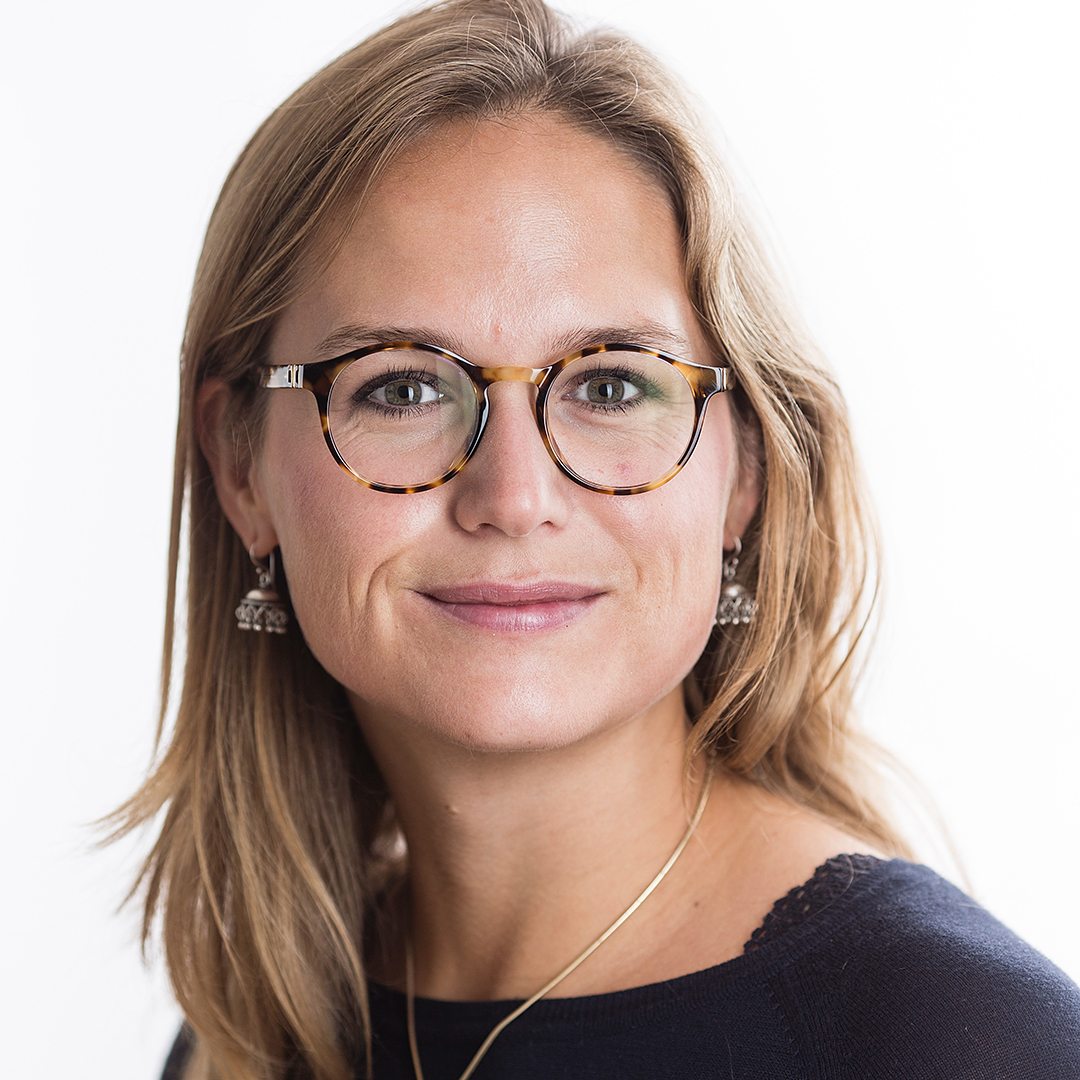
Tine Gade is Senior Research Fellow in NUPI’s Research Group on Peace, Conflict and Development.
She holds a PhD in political science from Institut d’Études Politiques (Sciences Po) in Paris. Her work focuses on urban sociology in the Levant; Islamism; violent extremism; governance of religion; civil-military relations; and judicial reform in Lebanon, Syria, Iraq, and Saudi Arabia. She has conducted fieldwork in Lebanon (2008), northern Iraq (2016), Saudi Arabia (2023), and also has experience from Syria and Egypt.
Her work includes Sunni City: Tripoli from Islamist Utopia to the Lebanese Revolution (Cambridge University Press, 2022) and How Lebanon’s security sector works amidst state collapse (Mediterranean Politics, 2025).
Gade is currently the project leader of the project Reactions to state regulation of Islam in times of Daesh (STATEISLAM), funded by the Research Council of Norway’s Researcher Project for Early Career Scientists (FRIPRO) (2021-2026), and also participates in other projects, including Russian Repertoires of Power in the MENA region (RUSMENA). Gade was previously a Max Weber postdoctoral fellow at the European University Institute in Florence, and a senior lecturer at the Department of Culture Studies and Oriental Languages at the University of Oslo.
Expertise
EDUCATION:
2008 - 2014 PhD in Political Science (summa cum laude), Centre de Recherches Internationales (CERI), Institut d'Études Politiques de Paris (Sciences Po), France. Title: The crisis of the political-religious field in Tripoli, Lebanon (1967-2011)
2007 - 2008 Research Master in Comparative Politics, Specialization "Muslim World". Institut d'Études Politiques de Paris (Sciences Po), France
WORK EXPERIENCE:
2016 - Senior Research Fellow, Norwegian Institute for International Affairs (NUPI)
2016 - 2018 Max Weber Post-doctoral Fellow, RSCAS, European University Institute
2015 - 2017 Associated doctor, CERI, Sciences Po Paris
2015 - 2016 Senior Lecturer, Department of Culture Studies and Oriental Languages, Faculty of Social Sciences, University of Oslo
2014 Lecturer, Department of Culture Studies and Oriental Languages, Faculty of Social Sciences, University of Oslo
2008 - 2013 Instructor, Sciences Po Paris University College2008-2011 Funded PhD student (“Allocataire de recherche”), SciencesPo Paris-CERI
Aktivitet
Filter
Clear all filters
Russian Repertoires of Power in the MENA region (RUSMENA)
The main objective of the RUSMENA project is to examine Russian power practices in the Middle East and Northern Africa (MENA) region between 2011 and 2021. ...
Preventing Violent Extremism in the Balkans and the MENA: Strengthening Resilience in Enabling Environments (PREVEX)
The overarching objective of PREVEX is to put forward more fine-tuned and effective approaches to preventing violent extremism. ...
Breakfast seminar: Street versus system – the protest wave in the Middle East
Over the past months, popular protests have shaken the rulers of Algeria, Lebanon, Iran and Iraq. In this breakfast seminar, NUPI researchers discuss the nature of the protests and the prospects for change.
Lebanese Sunni Islamism: A Post-Election Review
This research note analyses the internal and external factors that led to Al-Jama‘a al-Islamiyya‘s loss of its only parliamentary seat in 2018. Al-Jama‘a al-Islamiyya is the Lebanese branch of the Muslim Brotherhood. Through this case, the author assesses the status of Lebanon’s Sunni community and the electoral fortunes of regional Muslim Brotherhood organizations more generally. The main external factors leading to Al-Jama‘a al-Islamiyya’s electoral decline included the abandonment by the Future Movement, the law on proportional representation, potential regional involvement in the Lebanese elections and the rise of pro-Hezbollah Sunni MPs like those belonging to al-Ahbash. The internal challenges faced by Al-Jama‘a al-Islamiyya, on the other hand, include its strategic dilemma on how to position itself in the sectarianized 'New Middle East' after the Arab uprisings, as well as its organizational structure and its inability to properly convince its supporters of the last-minute alliance with the Christian Free Patriotic Movement (FPM). This note also analyses the fate of Lebanon’s Salafis and their absence from the elections, a result of the security pressures they face following their political support of the Islamist armed opposition in neighboring Syria. Furthermore, the research note explores the trajectory of the Al Masharee’ Association known as Al-Ahbash which, by returning to parliament in 2018, presented a fatal blow to the electoral hopes of Lebanon’s Sunni Islamists.
To engage or not engage? Libyan Salafis and state institutions
At the beginning of the recent escalation of hostilities in Libya in April 2019, one of the key questions posed was what role, if any, quietist Salafis would play. Followers of this trend have grown significantly in influence in recent years, including in the security sphere and government institutions. As a result, their decisions, especially those regarding military engagement, have the potential to have important consequences at the national level. The fact that these “quietist” Salafis in Libya are armed already poses interesting ideological questions. Moreover, the fact that their behaviour during the recent fighting in Tripoliihas been somewhat unpredictable indicates that their ideology of obedience to the sitting ruler requires further interrogation.This research brief looks at the way in which the quietist Salafis have evolved to gain such a strong position in Libya, assessing their behaviour in four distinct periods. It contrasts this behaviour with other Salafi trends in Libya, particularly the political Salafism associated with certain former leaders of the Libyan Islamic Fighting Group (LIFG). It argues that Libyan Salafis have adapted and renegotiated ideologies in the changing political context after 2011. More than pure ideology, the way in which they have responded to the constraints and opportunities created by this context has been the key factor in the evolution of the different groups and ultimately their fortunes.