Researcher
Tine Gade

Contactinfo and files
Summary
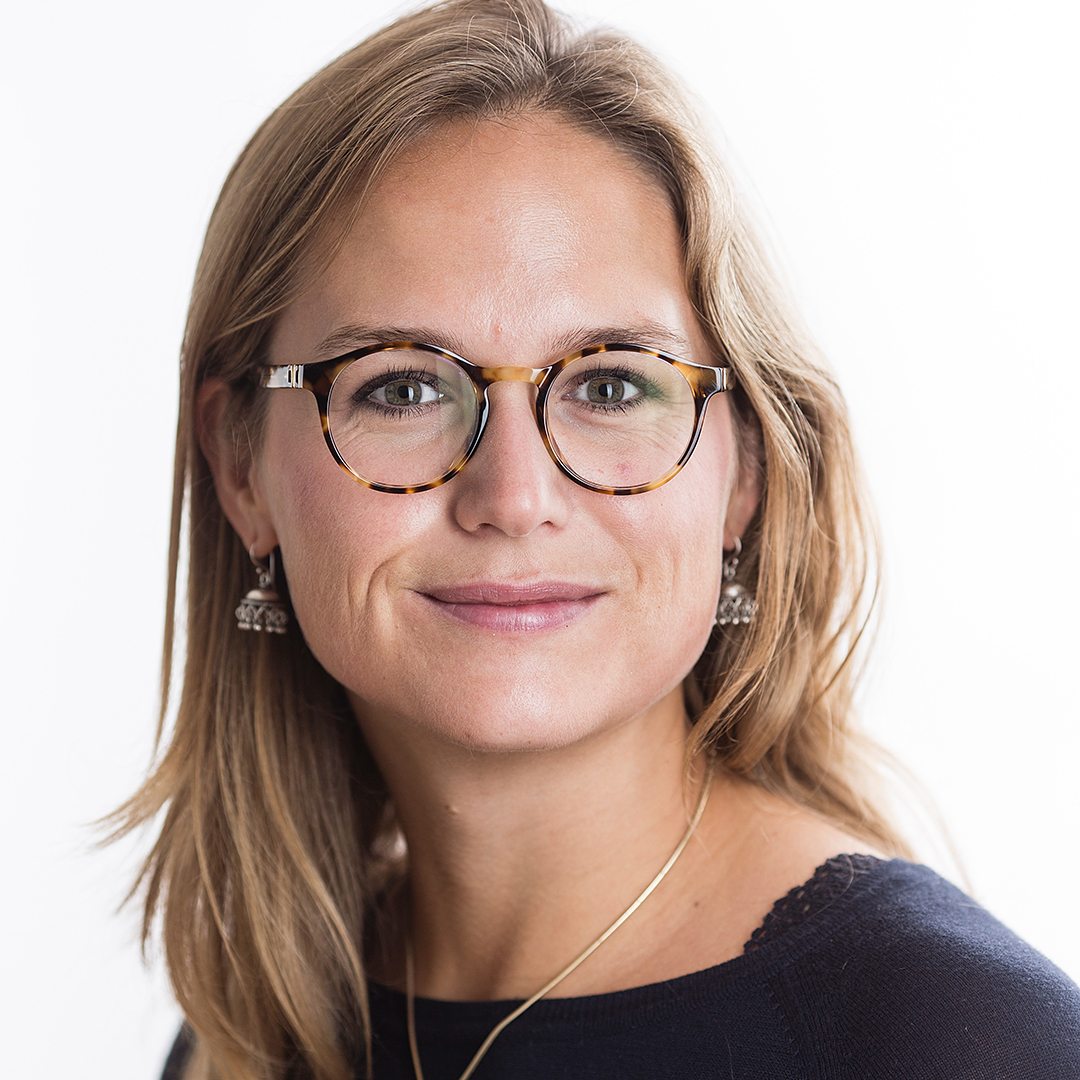
Tine Gade is Senior Research Fellow in NUPI’s Research Group on Peace, Conflict and Development.
She holds a PhD in political science from Institut d’Études Politiques (Sciences Po) in Paris. Her work focuses on urban sociology in the Levant; Islamism; violent extremism; governance of religion; civil-military relations; and judicial reform in Lebanon, Syria, Iraq, and Saudi Arabia. She has conducted fieldwork in Lebanon (2008), northern Iraq (2016), Saudi Arabia (2023), and also has experience from Syria and Egypt.
Her work includes Sunni City: Tripoli from Islamist Utopia to the Lebanese Revolution (Cambridge University Press, 2022) and How Lebanon’s security sector works amidst state collapse (Mediterranean Politics, 2025).
Gade is currently the project leader of the project Reactions to state regulation of Islam in times of Daesh (STATEISLAM), funded by the Research Council of Norway’s Researcher Project for Early Career Scientists (FRIPRO) (2021-2026), and also participates in other projects, including Russian Repertoires of Power in the MENA region (RUSMENA). Gade was previously a Max Weber postdoctoral fellow at the European University Institute in Florence, and a senior lecturer at the Department of Culture Studies and Oriental Languages at the University of Oslo.
Expertise
EDUCATION:
2008 - 2014 PhD in Political Science (summa cum laude), Centre de Recherches Internationales (CERI), Institut d'Études Politiques de Paris (Sciences Po), France. Title: The crisis of the political-religious field in Tripoli, Lebanon (1967-2011)
2007 - 2008 Research Master in Comparative Politics, Specialization "Muslim World". Institut d'Études Politiques de Paris (Sciences Po), France
WORK EXPERIENCE:
2016 - Senior Research Fellow, Norwegian Institute for International Affairs (NUPI)
2016 - 2018 Max Weber Post-doctoral Fellow, RSCAS, European University Institute
2015 - 2017 Associated doctor, CERI, Sciences Po Paris
2015 - 2016 Senior Lecturer, Department of Culture Studies and Oriental Languages, Faculty of Social Sciences, University of Oslo
2014 Lecturer, Department of Culture Studies and Oriental Languages, Faculty of Social Sciences, University of Oslo
2008 - 2013 Instructor, Sciences Po Paris University College2008-2011 Funded PhD student (“Allocataire de recherche”), SciencesPo Paris-CERI
Aktivitet
Filter
Clear all filtersIslam Keeping Violent Jihadism at Bay in Times of Daesh: State Religious Institutions in Lebanon, Morocco and Saudi Arabia since 2013
Can official Islamic institutions play a role to curb Sunni jihadi violence? Most Arab governments have granted a role to such institutions in recent years. Yet, the cases of Lebanon, Morocco and Saudi Arabia exhibit considerable differences: Sunni religious institutions in Lebanon are weak and only have a domestic role, and face difficulties fulfilling this role. The corresponding institutions in Morocco and in Saudi Arabia, however, are powerful and also perform foreign policy roles through religious diplomacy. Mainstream Muslim scholars want to be recognised as allies in the global struggle against jihadi violence; they have common interests with Western and Arab governments in combating jihadi violence. However, in the current climate of government control over official religious institutions, they lack the popular legitimacy needed to fight against violent jihadism. Religious institutions cannot be efficient when used as tools by authoritarian Arab governments. Political subjugation of religious clerics is a major reason for the fragmentation of the religious field and a driver of radicalisation.
The reconfiguration of clientelism and the failure of vote buying in Lebanon
One common demand in the 2011 uprisings in the MENA region was the call for ‘freedom, dignity, and social justice.’ Citizens rallied against corruption and clientelism, which for many protesters were deeply linked to political tyranny. This book takes the phenomenon of the 2011 uprisings as a point of departure for reassessing clientelism and patronage across the entire MENA region. Using case studies covering Morocco, Tunisia, Egypt, Jordan, Lebanon, Turkey and the Gulf monarchies, it looks at how the relationships within and between clientelist and patronage networks changed before 2011. The book assesses how these changes contributed to the destabilization of the established political and social order, and how they affected less visible political processes. It then turns to look at how the political transformations since 2011 have in turn reconfigured these networks in terms of strategies and dynamics, and concomitantly, what implications this has had for the inclusion or exclusion of new actors. Are specific networks expanding or shrinking in the post-2011 contexts? Do these networks reproduce established forms of patron-client relations or do they translate into new modes and mechanisms? As the first book to systematically discuss clientelism, patronage and corruption against the background of the 2011 uprisings, it will be a valuable resource for students and scholars of Middle Eastern Studies. The book also addresses major debates in comparative politics and political sociology by offering ‘networks of dependency’ as an interdisciplinary conceptual approach that can ‘travel’ across place and time.
Islamist radicalisation in Europe – characteristics and drivers
Professor Olivier Roy visits NUPI to give a lecture on the characteristics and drivers of Islamist radicalisation in European societies.
Together all the way? Abeyance and co-optation of Sunni networks in Lebanon
This article assesses how social movement continuity may vary in non-democratic and repressive contexts. Using a single case study of Islamist networks in the northern Lebanese city of Tripoli over three decades, I ask: Under what conditions is social movement continuity possible, and in what form? Former studies have three levels of abeyance - activist network and personnel; movement goals and repertoires; and collective identities and symbols - are instructive. Network survival and abeyance structures can facilitate rapid mass protests in case of a facilitating external conjuncture. This analysis relies on data collected during fieldwork conducted over a decade in Tripoli, triangulated with secondary literature and primary sources in Arabic. I find that four individual-level continuity pathways are available in authoritarian contexts: continuation of activism; disengagement; co-optation; and arena shifts. These pathways should not be seen as final and stable outcomes but as fluctuating and contingent processes, or pathways. Due to the ambiguity of informal networks, co-opted movements may easily turn against the authorities once again. Moreover, local legacies of protests may be used as resources by new protest leaders.
Hybrid paths to resistance in the Muslim world: Iraq, Lebanon, Libya and Mali (HYRES)
HYRES studies the interaction between Islamist movements and the state in the cases of Iraq, Lebanon, Libya and Mali, and is designed to answer the following question: Why do some Isla...
Lebanon: Political leadership confronted by Salafist ideology
Force est de constater que les débordements de la crise syrienne au Liban sur le plan sécuritaire sont restés relativement limités, comparé à la violence massive de l’autre côté de la frontière. Cette note de recherche fait l’hypothèse que si le calme au Liban est tout relatif, il est aussi le résultat de mécanismes de contrôle politique et social bien établis, et notamment les liens entretenus par les notables et leaders communautaires avec la population. Comme nous le savons, le modèle consociatif libanais fait de ces élites des « champions communautaires » et des médiateurs entre leurs communautés et l’État libanais : porte-paroles, responsables de négociations intercommunautaires et régulateurs de conflits intercommunautaires. Les leaders doivent en effet composer avec les radicaux de leurs communautés et « contrôler » leurs « rues politiques ». A travers le cas de la communauté sunnite libanaise, cette note de recherche analyse dans une première partie l’essor de l’extrémisme sunnite, le salafisme djihadiste. Dans une seconde partie, nous nous pencherons sur les mécanismes de contrôle et d’interaction entre la jeunesse urbaine pauvre et les notables sunnites, et plus particulièrement la question des mécanismes communautaires. Il s’agit là de comprendre dans quelle(s) mesure(s) ces mécanismes existant de manière similaire dans les communautés chiite, maronite et druze, expliquent l’adaptation de l’État libanais face à la crise syrienne. Nous démontrerons que contrairement aux études décrivant les islamistes comme constituant une menace à la stabilité libanaise et à la cohésion nationale, ces derniers s’adaptent et s’intègrent à la réalité locale. Les islamistes sont aussi pragmatiques : les intérêts privés, communautaires, politiques et familiaux peuvent aussi aisément prendre le pas sur l’élément religieux. Cela rend possible une position consensuelle vis-à-vis des élites politiques sunnites, et du phénomène de libanisation du salafisme, par leur entrée dans des réseaux clientélistes. Les militants de Daech ont quant à eux un ancrage international, ce qui les rendrait plus dangereux, car moins facilement contrôlables par les notables salafistes ou par les élites politiques. Ils sont jeunes et en rupture avec leurs parents et leur communauté. Toutefois, puisque les jeunes de Daech se réclament du salafisme, les notables salafistes jouissent encore d’un certain respect parmi eux. L’inclusion des cheikhs salafistes libanais dans des processus de négociation avec Daech continue donc d’être d’une grande importance. Finalement, le courant du Futur et Hariri sont de plus en plus contestés en interne par les électeurs sunnites. Le plus grand rival de Hariri n’est pas représenté par les salafistes mais par d’autres leaders sunnites plus en phase avec les positions de la communauté, tels qu’Achraf Rifi.
Limiting violent spill-over in civil wars. The paradoxes of Lebanese Sunni jihadism. 2011-2017
Research on violent spillovers in civil war has often exaggerated the potential for conflict contagion. The case of Lebanon is a counter-example. Despite the massive pressure of the horrific war in next-door Syria, it has, against all odds, remained remarkably stable – despite the influx of more than 1 million Syrian refugees and almost complete institutional blockage. This paper, based on ethnographic research and semi-structured interviews from Lebanon, studies the determination to avoid a violent spillover into Lebanon from the perspective of the country’s Sunni Islamists. Recent trends in the scholarly literature have shown that Islamists are not inherently revolutionary, nor always dogmatists, and often serve many social purposes at home. The main argument is that the Syrian war has not been imported into Lebanon; instead, the Lebanese conflict is externalized to Syria. Lebanon’s conflicting factions, including the Islamists, have found the costs of resorting to violence inside Lebanon to be too high. Even those Lebanese Sunnis who have crossed the borders to fight in Syria do so because of domestic reasons, that is, to fight against Hezbollah on Syria soil, where they can do so without risking an explosion of the Lebanese security situation. Sectarianism, in the sense of opposition to Hezbollah and the Lebanese Shia, is the main driver of radicalization for Lebanese Sunnis.
Liban : les paradoxes du salafisme jihadisme levantin
Le Liban est un contre-exemple des recherches sur la guerre civile, qui souvent surévaluent le potentiel de contagion transfrontalière des conflits. En dépit de nombreux facteurs qui aurait pu entraîner l’expansion au Liban de la crise en Syrie, les débordements restent limités, comparés à la violence de l’autre côté de la frontière. Malgré les liens historiques étroits entre les champs islamistes syrien et libanais, le nombre de Libanais sunnites ayant rejoint les djihadistes en Syrie est réduit (environ 1 000 personnes). C’est avant tout la surenchère confessionnelle et la rancune vis-à-vis du Hezbollah qui pourraient entraîner un nombre plus important de jeunes sunnites vers la prise d’armes. Si Daech ou Al-Qaïda misent sur cette option, et si les frustrations politiques et économiques d’une partie des sunnites ne s’atténuent pas sous le nouveau gouvernement, les risques de violence et de discorde civile, à long terme, demeurent plus que réels.
Situating (In-)Security: A United Army for a Divided Country?
This volume examines Lebanon’s post-2011 security dilemmas and the tenuous civil-military relations. The Syrian civil war has strained the Lebanese Armed Forces’ (LAF) cohesion and threatens its neutrality – its most valued assets in a divided society. The spill-over from the Syrian civil war and Hezbollah’s military engagement has magnified the security challenges facing the Army, making it a target. Massive foreign grants have sought to strengthen its military capability, stabilize the country and contain the Syria crisis. However, as this volume demonstrates, the real weakness of the LAF is not its lack of sophisticated armoury, but the fragile civil–military relations that compromise its fighting power, cripple its neutrality and expose it to accusations of partisanship and political bias. This testifies to both the importance of and the challenges facing multi-confessional armies in deeply divided countries.
The Lebanese army after the Syrian crisis: Alienating the Sunni community?
This chapter analyses Lebanese Armed Forces’ (LAF) attempts to deal with security threats in the wake of the Syrian crisis and the implications for relations with Lebanon’s Sunni community. Examining incidents where the LAF has been accused of targeting and conspiring to kill Sunni clerics, the authors analyse the growing discontent among Lebanese Sunnis who are opposed to the military role of Hizbollah in Syria. Since the 2011 Syrian revolt, the LAF has been accused of being a partisan institution, reflecting the growing influence of militant jihadist movements targeting the army. The lack of a national defence strategy has forced the army to intervene on a case-by-case basis in a context of sectarian unrest. However, in contrast to the situation in Shia-majority areas controlled by one dominant actor, Hizbollah, the Sunni ‘scene’ emerges as more fragmented.