Researcher
Minda Holm

Contactinfo and files
Summary
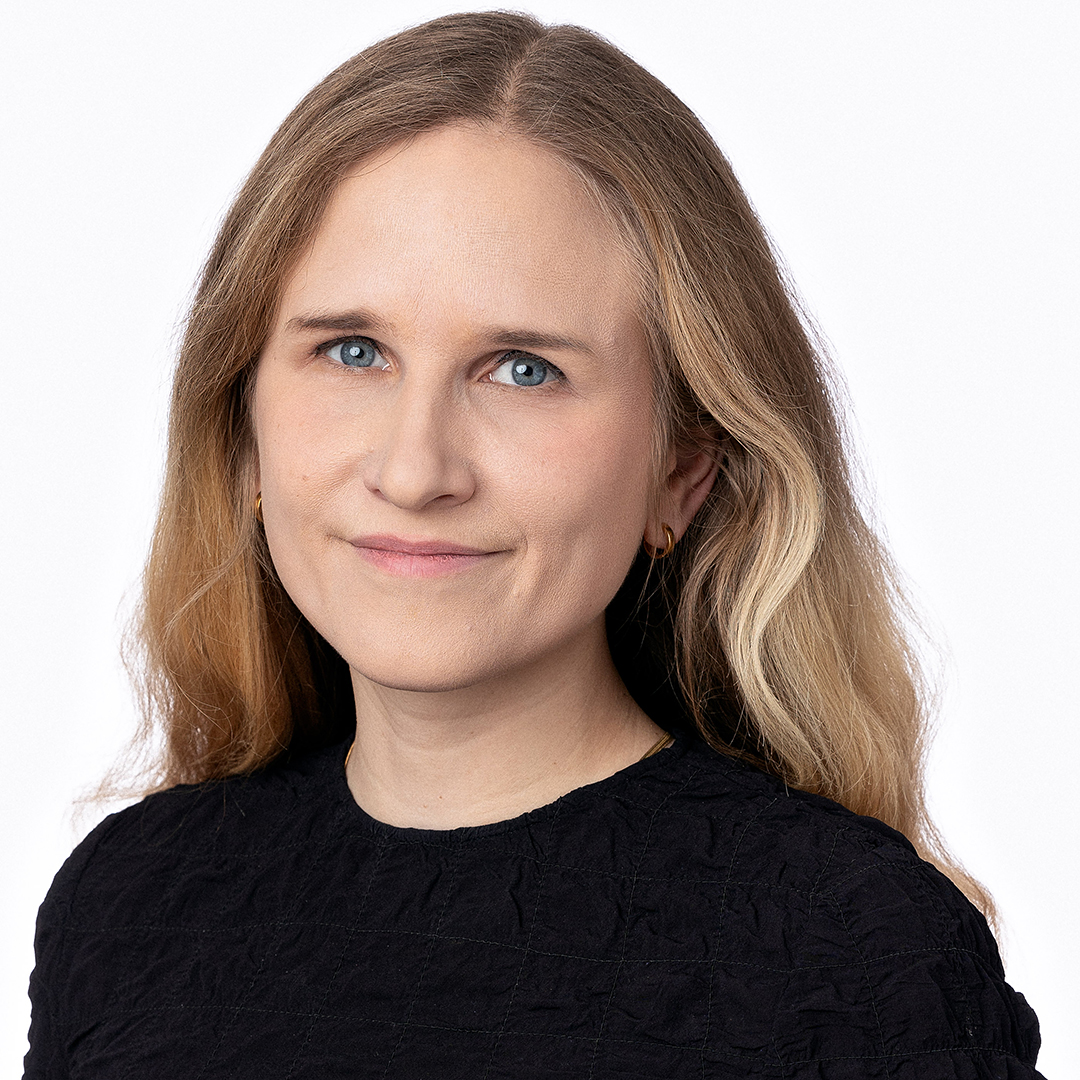
Dr. Minda Holm is a Senior Research Fellow at NUPI, working on questions of global order and global governance, ideology and ideological contestation, the function of different liberalisms and dominant state ideals in international politics historically and at the present time, the tensions between liberal-democratic values and security and warfare, the global ideas of illiberal, reactionary, radical right and antiliberal forces, and the different meanings of sovereignty, morality, and (mis)recognition in global politics. She works on these topics both theoretically (social and political theory), and empirically. She holds a PhD in Political Science from the University of Copenhagen (September 2023), with a monograph titled ‘Towards a Social Theory of International Ideology, Ideological Scripts, and Counter-Ideology. Rethinking ‘Liberal International Order’ and the Far Right’s Critique’. Whilst doing her PhD, she also worked at the Danish Institute of International Studies (DIIS), where she was a part of the project World of the Right. She was also the project leader between 2018-2023 on a research project that studied the international ideology and networks of the Far Right in Europe, Russia, and the US, and their implications for global order.
Holm has in parallel with writing her monograph published in journals such as Review of International Studies, International Studies Review, The Hague Journal of Diplomacy, and New Perspectives, in peer-reviewed anthologies, and in Scandinavian-language peer-reviewed outlets, on topics ranging from conceptual history and sovereignty, (mis)recognition and shifting state ideals within international law and politics, liberal exceptionalism, self-perceptions, and double standards, reactionary, radical right and illiberal visions of world politics, international diaspora politics, Norwegian, US, and Russian foreign policy and diplomacy, and historical and political changes within liberal internationalism. She has had a monthly column on global politics since 2017, since 2020 in Klassekampen. She holds a double master’s degree in international relations from the London School of Economics (LSE) and the George Washington University, where she was a Fulbright scholar. She has lived and studied in Egypt, Wales, Russia, the US, England, Kazakhstan, Tajikistan, and Denmark, and is a board member of the Human Rights House Foundation (2018- ). She was editor-in-chief of the Scandinavian peer-reviewed IR journal Internasjonal Politikk between 2018 and 2024. See her personal webpage for more, including publications.
Expertise
Education
2018 – 2023 PhD, Department of Political Science, University of Copenhagen. Submitted November 2022, defended after maternity leave September 2023.
2015 – 2016 MA George Washington University, USA (Fulbright scholar)
2013 – 2014 MSc London School of Economics and Political Science, England
2008 – 2013 BA (2, in parallel), Political Science and Russia studies, University of Oslo and American University in Cairo, Oslo/Egypt
Main work experience
2023 – Senior Research Fellow, NUPI
2018 – 2022 PhD Fellow, NUPI, University of Copenhagen and Danish Institute of International Studies (DIIS)
2017 – 2018 Research Fellow, NUPI
2012 – 2017 Research Assistant, NUPI (fulltime from January 2016)
2012 – 2012 Intern, Organization of Security and Cooperation in Europe (OSCE), Tajikistan
2010 – 2011 Trainee, Norwegian Ministry of Foreign Affairs, Kazakhstan (covering all of Central Asia)
2009 – 2010 Journalist, Radio Nova
Aktivitet
Filter
Clear all filtersLegitimering gjennom (selektiv) felles fortid: russisk bruk av historie i Ukraina-konflikten
How has Russia used history to justify its actions in the conflict in Ukraine? Through an analysis of official statements of the Ministry of Foreign Affairs, as well as speeches and remarks by Putin, this article argues that history has played an important but varying role in official rhetoric. With Crimea, the emphasis was on the ‘sanctity’ of the territory for Russian Orthodox identity, drawing on history dating back to the baptism of Prince Vladimir in 10th century AC. The shared past of the two states has not been as central in official Russian policy justification regarding Ukraine outside Crimea: the ‘brotherhood’ of the two nations has been noted repeatedly, but usually secondary to arguments pertaining to economic and political interests. The two world wars have been used as a cautionary tale, with Russia effectively seeking to delegitimize the new Ukrainian government by evoking carefully selected elements of its past. Finally, the author looks at the use of international precedence as a form of justification, turning the history of Western – US in particular – actions back on Russia’s critics. The official usage of history is placed within broader strategies of legitimation, as it is not enough to study propaganda and manipulation strategies as part of information warfare to explain how the Kremlin achieves support for its policies. The ‘thick’ historical narratives of Crimea play on elements linked to issues of national identity, making it difficult to dispute using the type of counter-propaganda and rebuttal of disinformation proposed by some. Article in Norwegian only.
Instruments of State Power: History and Theory (ISPO)
The ISPO Workshop Series will develop new and innovative analytical tools and vocabularies to help understand current developments in global politics. ...
Beyond Mothers, Monsters, Whores: Thinking about Women’s Violence in Global Politics
Det er ofte fokus på offerrollen når det snakkes om kvinner i krig og konflikt. Det er en viktig del av den kjønna erfaringen av konflikt, og var lenge neglisjert i både akademia og politikken. Samtidig overser mange fremdeles kvinners aktive deltagelse i politisk vold. Det analytiske utgangspunktet i «Beyond Mothers, Monsters, Whores: Thinking about Women’s Violence in Global Politics» er at feminisme ikke handler om å argumentere for at kvinner er mindre voldelige enn menn, eller at verden automatisk ville vært et bedre sted om kvinner styrte den. Det handler om å analysere manifestasjoner av kjønn i global politikk. Kvinner som voldelige politiske aktører går imot de dominerende bildene av kvinner som fredelige, moderlige, emosjonelle, rene, uskyldige, fredselskende. I konfliktsituasjoner er de dermed gjerne fremstilt som enten årsaken (det som skal beskyttes) eller ofrene. Hvis det er først er fokus på kvinner som voldsutøverer, blir det gjerne individualisert og knyttet til dem som kvinner. De er ikke bare voldsutøverer, de er kvinnelige voldsutøverer – både voldelige, og dårlige som kvinner, sjelden fremstilt som «bare» terrorister eller soldater. Tilsvarende blir de sjelden fremstilt som «rasjonelle» aktører, og deres valg tolkes gjerne som noe personlig, ikke politisk.
Duty of Care: Protection of Citizens Abroad (DoC:PRO)
How can Norwegian society best be protected, when increasing numbers of citizens are found outside the borders of the state? ...
Erika Fatland: Sovjetistan
En diskusjon som lenge har pågått i forskningen på postsovjetisk Sentral-Asia er hvor mye mening det gir å avgrense det som et eget forskningsfelt. Hvor like er egentlig Kasakhstan, Kirgisistan, Tadsjikistan, Turkmenistan og Usbekistan, og bør man inkludere Afghanistan i regionsdefinisjonen? Den samme ambivalensen gjenspeiles i måten styresmaktene snakker om seg selv på. Forsøkene på regionalt samarbeid – ofte initiert av eksterne aktører – har som regel feilet på grunn av en blanding av manglende tillit og manglende vilje til å gi avkall på kontroll over interne affærer vis-a-vis sine naboland. Dyrkingen av den nasjonale identiteten har vært i sentrum siden uavhengigheten, blant annet i forsøk på å integrere de mange subnasjonale identitetene. Det er ikke ofte man møter på folk i disse landene som ser seg selv som en del av et større sentralasiatisk felleskap: de mange andre identitetsmarkørene er langt viktigere.