Researcher
Julie Wilhelmsen

Contactinfo and files
Summary
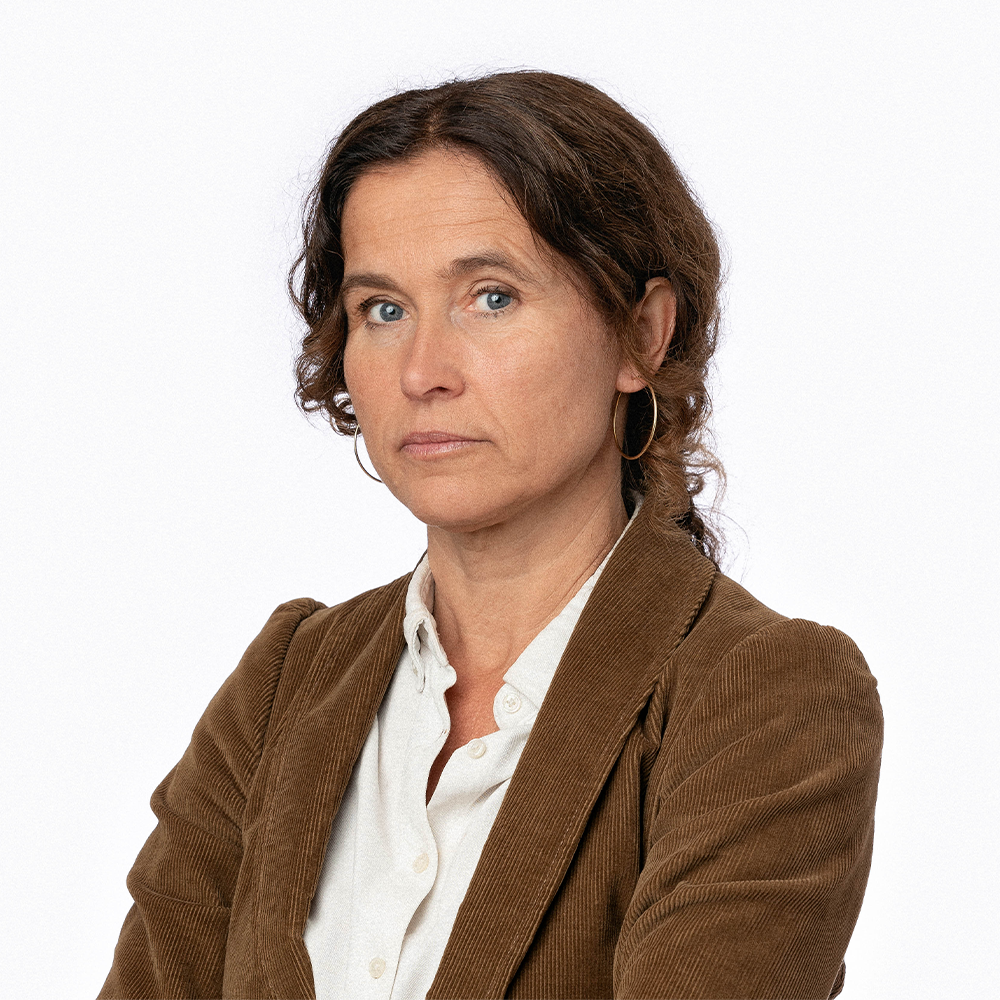
Julie Wilhelmsen is Research Professor and Head of the Research group for Eastern Europe and Asia at the Norwegian Institute of International Affairs. She holds a PhD in political science and conducts research in the fields of critical security studies, Russian foreign and security policies and the radicalization of Islam in Eurasia.
The two post-soviet Chechen wars have been a constant focus in her research and she is also heads projects related to conflict resolution in the North Caucasus. From 2012 to 2016 she was the editor of the Scandinavian-language journal Internasjonal Politikk, and has a wide outreach to the Norwegian public on issues related to Russia and Eurasia through frequent public talks and media comments. In 2019 – 2021 Wilhelmsen is an expert in the Cooperative Security Initiative (CSI), an initiative which is designed to generate ideas and shift momentum in favor of cooperative security and multilateralism through the OSCE in order to build a safer Europe.
Expertise
Education
2014 Ph.D in Political Science, University of Oslo. Areas of specialisation: Russian Politics, Critical Security Studies, Discourse Analysis
1999 Cand.Polit. (Political Science), University of Oslo
1996 Master of Science in Russian and Post-Soviet Studies, London School of Economics and Political Science
1995 Mellomfag in Political Science, University of Oslo
1994 Mellomfag in Russian, University of Oslo
Work Experience
2025- Head of the Research group for Eastern Europe and Asia
2022- Research professor
2022 Head of the Research group for Eastern Europe and Asia (previously named the Research group for Russia, Asia and international trade)
2014-2022 Senior Researcher, NUPI
2003-2014 Researcher, Centre for Russian Studies, NUPI
2001-2003 Researcher and Project manager, Norwegian Defence Reseach Establishment
1999-2001 Higher executive officer, Norwegian Directorate of Immigration
Aktivitet
Filter
Clear all filters
The Russia Conference 2026: Violence in Russia
Why are the levels of violence in Russia so high, and how do they impact the country's political and economic development and its international relations? These are among the topics we will discuss at the Russia Conference 2026.
Resilience and resistance in times of war
What are people willing to do, and to accept, when war becomes everyday life? This seminar will look closer at civilian resilience in Ukraine and what Total Defence will ask of Norway.
Introduction: Power and Social Hierarchies in the North Caucasus: Perceptions and Challenges
Power and social hierarchies lie at the heart of some of the most pressing issues facing Russia today. Nowhere is this more true than in the North Caucasus. In this introduction to the special issue, we explain why these relations and hierarchies – increasingly viewed through the lens of “decolonization” – matter and how the region fits within broader debates. We then provide an overview of the contributions and how they combine to offer a more nuanced understanding of the region, its place, and the challenges it faces.
Breakfast seminar: Legitimacy’s labour lost: The social and psychological work of compliance and consent in wartime Russia
How has Russian public support for the war in Ukraine remained so resilient – and what dynamics are keeping it in place?
How to prevent a direct conflict between Russia and NATO?
How can a direct conflict between Russia and NATO be prevented? This seminar examines the pathways that could lead to war in Europe and the measures that might reduce the risk of escalation.
National network for competence on Russia (RUSSNETT 2026)
The national network for competence on Russia aims to preserve and further develop Norwegian knowledge of Russia across sectors in Norway. ...
Norwegian Russia policy in times of war: Hidden but unavoidable dilemmas
This chapter is a part of the book 'Dilemmaer i norsk utenrikspolitikk'. The book is in Norwegian only.
Proxy Games and Freezing Conflict: Trilateral Identifications, Fear, and Agency in Russia-Georgia Relations Post-Crimea
This article argues that conflicts can be frozen through engagement in mutual trilateral identification games that marginalize lower-level political entities while elevating their danger through identification with threatening third-party Others. Drawing on and broadening the literature on national identity discourse, securitization, and foreign policy, the article theorizes and investigates trilateral identifications and combines two sets of such Self/Other/Other representations as they emerge in official language between two political entities over time. It analyzes relations between Russia and Georgia in the period following the onset of the conflict in Ukraine in 2014, after which Moscow intensified its activities in the post-Soviet space with reference to Western encroachment in its so-called “near abroad.” While Russia re-emphasized Georgia as a Proxy of the threatening “West,” Georgia reduced the breakaway republics of Abkhazia and South Ossetia to Proxies of Putin’s “expansionist Russia.” These evolving mutual identifications of Self and Other(s) not only rendered policy practices of diplomacy and negotiation less reasonable, but they also contributed to freezing conflict by removing the agency to act and compromise at the imagined negotiating table from the Proxy to the alleged “real” third-party Other.