Researcher
Julie Wilhelmsen

Contactinfo and files
Summary
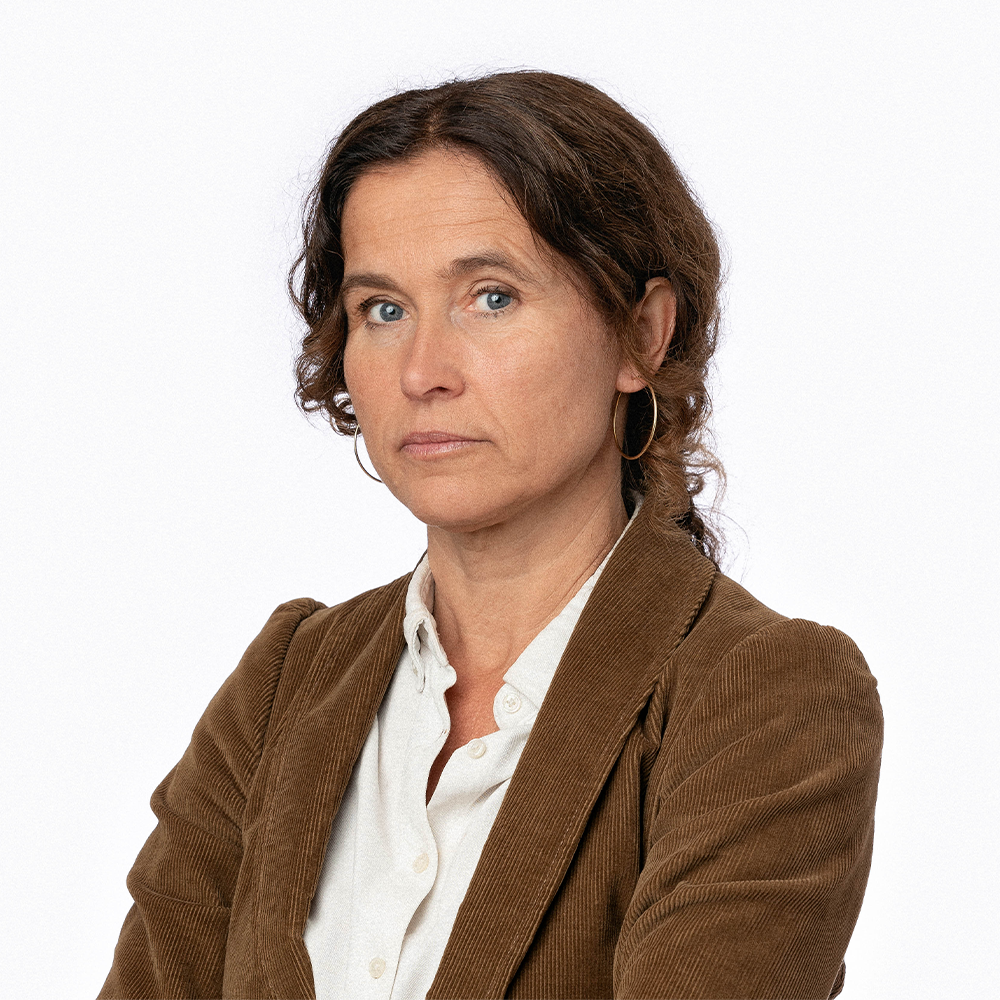
Julie Wilhelmsen is Research Professor and Head of the Research group for Eastern Europe and Asia at the Norwegian Institute of International Affairs. She holds a PhD in political science and conducts research in the fields of critical security studies, Russian foreign and security policies and the radicalization of Islam in Eurasia.
The two post-soviet Chechen wars have been a constant focus in her research and she is also heads projects related to conflict resolution in the North Caucasus. From 2012 to 2016 she was the editor of the Scandinavian-language journal Internasjonal Politikk, and has a wide outreach to the Norwegian public on issues related to Russia and Eurasia through frequent public talks and media comments. In 2019 – 2021 Wilhelmsen is an expert in the Cooperative Security Initiative (CSI), an initiative which is designed to generate ideas and shift momentum in favor of cooperative security and multilateralism through the OSCE in order to build a safer Europe.
Expertise
Education
2014 Ph.D in Political Science, University of Oslo. Areas of specialisation: Russian Politics, Critical Security Studies, Discourse Analysis
1999 Cand.Polit. (Political Science), University of Oslo
1996 Master of Science in Russian and Post-Soviet Studies, London School of Economics and Political Science
1995 Mellomfag in Political Science, University of Oslo
1994 Mellomfag in Russian, University of Oslo
Work Experience
2025- Head of the Research group for Eastern Europe and Asia
2022- Research professor
2022 Head of the Research group for Eastern Europe and Asia (previously named the Research group for Russia, Asia and international trade)
2014-2022 Senior Researcher, NUPI
2003-2014 Researcher, Centre for Russian Studies, NUPI
2001-2003 Researcher and Project manager, Norwegian Defence Reseach Establishment
1999-2001 Higher executive officer, Norwegian Directorate of Immigration
Aktivitet
Filter
Clear all filters
Breakfast seminar: Russia and global nuclear risks: Weapons, civilian facilities, and proliferation
How can open and transparent scientific analysis inform policy debates on the challenges nuclear risks bring?
National network for competence on Russia (RUSSNETT 2025)
The national network for competence on Russia aims to preserve and further develop Norwegian knowledge of Russia across sectors in Norway. ...
Norsk russlandspolitikk i krigens tid: Skjulte, men uomgjengelige dilemmaer
(This book is in Norwegian): Boken "Dilemmaer i norsk utenrikspolitikk" diskuterer Norges handlingsrom, avveininger og valg i møte med vår tids store utenrikspolitiske dilemmaer. Dette kapitlet omhandler forholdet til Russland.
Våpen alene er et blindspor
The path forward in what is undeniably a political crisis in inter-state relations appears, on the surface, to be rather straightforward: rearmament. Attention is then directed toward quantifying and benchmarking—counting both the numbers and each other: What is required, and who is doing the most? This has become a prevailing pattern throughout the war in Ukraine, where militarization is perceived as the only effective response. For a Ukraine that stands to lose U.S. support, prioritizing weapons is indeed crucial at this moment, in order to secure leverage at the negotiating table being set by Trump. But for Europe, an arms-only approach is a dead end—and this is something European leaders ought to recognize. As the metaphorical iron curtain threatens to once again divide the peoples of Europe, we need pragmatic leaders who take diplomacy seriously, writes Julie Wilhelmsen in this op-ed.
Moral- og realpolitikk i en ny verden
The scenes from the White House on Saturday unsettled even the most seasoned analysts. The anticipated signing of the mineral agreement—which was expected to provide Ukraine with an indirect American security guarantee that the country desperately needs—did not take place. Instead, the public witnessed an open dispute between President Donald Trump, Vice President J.D. Vance, and President Volodymyr Zelensky. The deal that may now emerge in the aftermath of these events is unlikely to be the one Ukraine had hoped for. Subsequent commentary on social media has largely focused on identifying who initiated the quarrel. These responses have tended to fall into two polarized camps, each assigning clear blame to one side—either Zelensky or Trump and Vance
Hva nå?
It is time for Norway to develop a foreign policy for security—one grounded in issues rather than party politics, writes Julie Wilhelmsen in this op-ed. This is not an argument for withdrawing Norway from NATO or breaking ties with the United States, but rather an attempt to initiate a debate on how to create greater room for action in a policy area that Norway must independently formulate. It is an invitation to engage in rational and knowledge-based reasoning—something we, as “like-minded” actors, should pursue to find the best solutions in a time when global challenges are growing ever more complex and there is a notable absence of clear leadership anywhere in the world. It is, of course, uncertain whether Norwegian leaders will have any leverage in the White House when the time comes. Moreover, should any of the proposals I have outlined be pursued, they will undoubtedly generate significant dissonance among domestic audiences after years of rhetoric suggesting that “weapons are the path to peace”—an approach that has at times appeared to serve as Norway’s new moral compass. Yet, a strategy that combines deterrence with reassurance in security policy, and that promotes diplomacy in international affairs, is both needed globally and, from a historical perspective, a well-established Norwegian position. Such an approach could make Norway more secure and enhance the credibility of Norwegian foreign policymakers.
Repatriation of Foreign Terrorist Fighters and Families in Central Asia
What happens when foreign fighters return home? How do states approach repatriation, rehabilitation and reintegration?
Topos of threat and metapolitics in Russia’s securitisation of NATO post-Crimea
This article makes a twofold contribution on the relationship between self/other securitisation, ambiguous threat constructions, and anxiety at the intersection of Securitisation Theory (ST) and Ontological Security Studies (OSS). First, we develop the concept topos of threat (TT) as a potent linguistic anchor in securitisation processes. TTs depict an entire self/other threat situation that warrants escape, serving identity needs while staying flexible and ambiguous. However, their frequent rhetorical deployment can blur the threat construction and increase anxiety: this challenges the classical scholarly assumption that antagonism necessarily alleviates anxiety. Second, we theorise metapolitics as an anxiety mediation strategy. Metapolitics is a mode of interpretation – a relentless analysis of surface clues to expose a deceptive, powerful adversary – which in the final event fails to alleviate anxiety. The dual practice of nurturing topoi of threat and metapolitics drives conflict because it sets in motion a vicious securitisation spiral that entrenches rigid patterns of self/other representation and fosters a bias of anticipating hostility. We employ abductive theorising: working with established theory alongside empirical discovery through a discourse analysis of Russia’s official rhetoric on NATO and the use of the TT ‘colour revolution’ since the conflict in Ukraine began in 2014.
Trump II: A new trajectory in Russia relations for NATO Nordic states
• The incoming Trump administration will replace the policy of “stand with Ukraine for as long as it takes” with “making a deal with Russia”. This might entail de-escalation with Russia as well as economic and security burden-sharing with Europe. Norway and its now NATO neighbours Sweden and Finland have a window of opportunity to develop new policy for the second Trump term. • An adjusted approach to relations with Russia in the North can be devised that draws on Norwegian traditions in its relations with Russia. This approach will differ from the UK, Poland and the Baltic States but can represent a fruitful model of NATO membership for the Nordic states. • Despite a significant decline in military tension in the North since 2022, the risk of a future security competition with Russia and Nordic NATO members should not be downplayed. Presuming Russia is a status quo power in the North, NATO should have a clear and predictable posture in the North that combines deterrence and reassurance. • Russia should not be treated as a monolithic entity; there are moderates that would welcome diplomacy with Nordic NATO neighbours. Backchannel contacts between Russia and the Nordic NATO states can develop the outlines of an adjusted security posture for the North that could be received favourably by the new Trump Administration as it attempts to open negotiations to end the war in Ukraine